

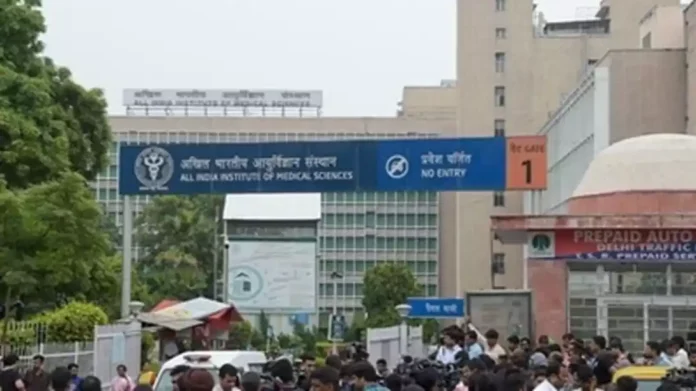


- Harish Rana, first Indian allowed passive euthanasia, died at AIIMS on March 24, 2026.
- He had been in coma since 2013 after a severe head injury.
- Supreme Court recently permitted withdrawal of life support in a landmark ruling.
In a historic and deeply emotional case, Harish Rana passive euthanasia death marks the end of India’s first legally approved “right to die” case. Harish Rana, who had been in a coma for over 13 years, passed away at AIIMS New Delhi at 4:10 PM on March 24, 2026, following the completion of the passive euthanasia process.
According to the official hospital statement, Rana was under specialized care in the palliative oncology unit and passed away peacefully after medical procedures were carried out in line with legal and ethical guidelines.
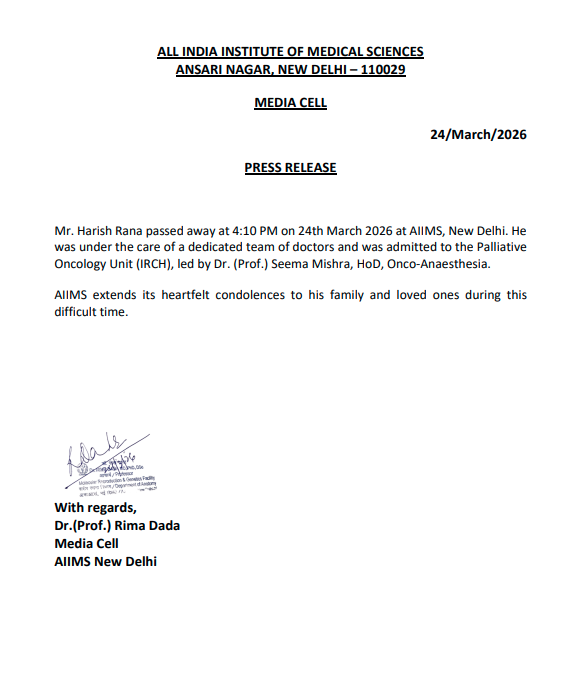
AIIMS Confirms Harish Rana’s Death
The All India Institute of Medical Sciences issued a formal press release confirming the development.
Rana had been admitted to the Dr BR Ambedkar Institute Rotary Cancer Hospital at AIIMS on March 14, where a team led by senior specialists supervised his care during the final stages.
The hospital extended condolences to his family, acknowledging the emotional weight of the case.
Harish Rana Case India’s First Passive Euthanasia Approval
Harish Rana’s case became a landmark in India’s legal and medical history.
Earlier in March 2026, the Supreme Court upheld his right to passive euthanasia, allowing the withdrawal of artificial life support after due medical and legal review.
Rana, a resident of Ghaziabad in Uttar Pradesh, had been in a persistent coma since 2013 after suffering a catastrophic head injury from a fall while he was a student.
The court’s decision marked the first time such permission was granted in India under established legal safeguards.
What Is Passive Euthanasia and How It Was Carried Out
Passive euthanasia involves withholding or withdrawing life sustaining treatment in cases where recovery is medically impossible.
In Rana’s case, the process included:
- Gradual withdrawal of artificial nutrition and medical support
- Continuous palliative care to ensure no pain or distress
- Supervision by specialized medical teams and ethics committees
The procedure followed strict protocols, including approval from medical boards to ensure compliance with Indian laws on end of life care.
Why This Case Matters for India
The case has far reaching implications for India’s healthcare and legal systems.
It reinforces the role of patient dignity and end of life rights, while also highlighting the importance of safeguards to prevent misuse.
The ruling and its implementation may shape future cases involving living wills, terminal illness and prolonged unconscious states.
You May Like
Trending Searches Today |
- Odisha to Launch ‘Ama Rasta’ WhatsApp Chatbot for Road Accident Response
- NSE IPO GMP Falls to ₹55 Ahead of Allotment and Listing
- Odisha Heavy Rain Alert: Bay of Bengal System May Become Deep Depression
- Odisha Final Voter List 2026: 3.16 Crore Electors After SIR, What to Do If Your Name Is Missing
- Mahanadi Water Dispute: Odisha, Chhattisgarh Move Toward Settlement