
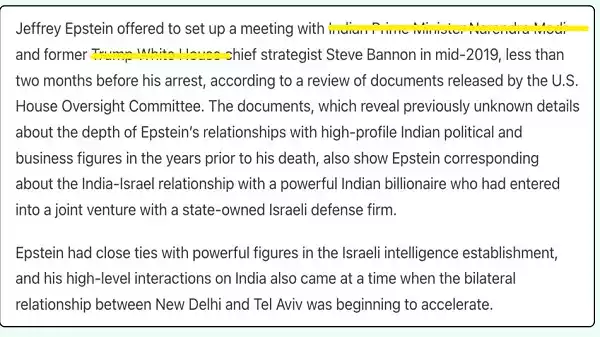

- Epstein files Modi controversy sparked debate after Congress raised questions over unverified references in US investigative records.
- The MEA rejected any association, calling the claims “trashy ruminations” with no factual basis.
- Officials stressed that mention of a name in released documents does not imply wrongdoing or criminal link.
New Delhi: The Epstein files Modi controversy escalated on Saturday after the Congress demanded clarification from Prime Minister Narendra Modi over his name appearing in publicly released US investigative records linked to Jeffrey Epstein.
The Ministry of External Affairs (MEA), however, firmly dismissed any insinuation of association, calling such references baseless and contemptible.
MEA Rejects Allegations as Unfounded
In an official statement, the MEA said it had noted reports of an email from the so-called Epstein files that mentioned the Prime Minister’s visit to Israel in 2017.
The ministry clarified that beyond the fact of Modi’s official diplomatic trip, the rest of the claims were “little more than trashy ruminations by a convicted criminal” and deserved to be rejected outright.
Congress Raises Questions Over Document References
The Congress shared screenshots of two documents on social media, claiming they raised serious concerns about the Prime Minister’s diplomatic engagements being discussed in Epstein-related correspondence.
Senior Congress leader Jairam Ramesh described the issue as scandalous and questioned the Prime Minister’s silence on the matter.
Also Read | Budget 2026: Foreign Individuals Can Invest Directly in Indian Equities
Party spokesperson Pawan Khera also demanded answers, urging the government to clarify the context of the references being circulated online.
What Are the Epstein Files?
The so-called Epstein files consist of court documents and investigative records related to probes and lawsuits surrounding Jeffrey Epstein’s alleged sex-trafficking network.
The US Department of Justice released parts of these records under the Epstein Files Transparency Act.
Experts caution that such files often contain mentions of public figures, politicians and institutions, but inclusion of a name does not automatically indicate wrongdoing or criminal association.
No Evidence of Direct Link Suggested
The documents cited by Congress do not provide evidence of a direct meeting or personal relationship between Modi and Epstein.
Analysts point out that Epstein died in August 2019 while in custody, and Modi did not travel to the US during the period in question, making speculation of any direct interaction highly unlikely.
Additionally, the wording of certain excerpts is described as ambiguous and does not confirm any actionable connection.
Political Debate Intensifies
Despite the MEA’s categorical dismissal, the Congress continues to press for political accountability, framing the issue as one of national reputation.
The government maintains that unverified insinuations based on criminal correspondence should not be legitimised.
Key Context: Mentions Do Not Imply Wrongdoing
Officials and observers stress that the appearance of a name in investigative material, especially in informal communications, does not constitute proof of misconduct.
The controversy highlights how politically sensitive issues can emerge from incomplete or misleading interpretations of public record releases.
You May Like
Trending Searches Today |
- Mukhyamantri Annapurna Yojana Odisha: Free Rice 5kg for All Beneficiary
- BJP West Bengal CM Face: Party Bets on Modi Over Leadership Pick
- Bhuvneshwar Kumar Nears 200 IPL Wickets Before CSK Clash
- Love Insurance Kompany Trailer Release: Pradeep Ranganathan Stars in Futuristic Love Story
- April 5, 2026 Daily Horoscope: Balance, Money Signals