
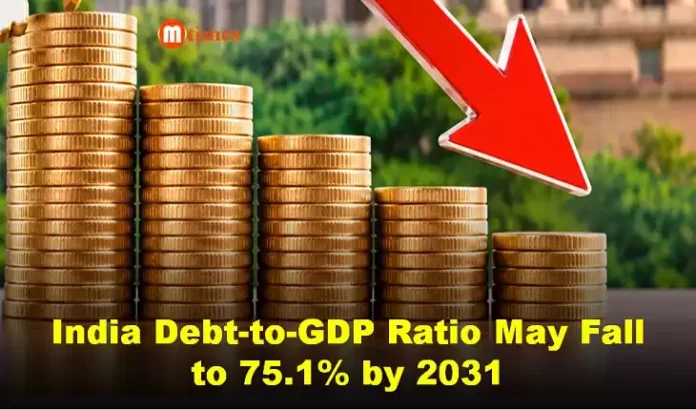

- India’s general government debt-to-GDP ratio is projected to fall from 84.3 per cent in 2025 to 75.1 per cent by 2031.
- Emerging market and developing economies’ debt ratio is projected to rise to 84.2 per cent, while China’s could reach 122.1 per cent.
- EY has stressed sustained capital expenditure, fiscal discipline and inflation management to support India’s economic outlook.
New Delhi, November 27, 2026: India’s general government debt-to-GDP ratio is projected to decline from 84.3 per cent in 2025 to 75.1 per cent by 2031, according to EY’s November 2026 Economy Watch report, which cites International Monetary Fund (IMF) projections.
The expected reduction of 9.2 percentage points would make India an exception among major emerging economies, where government debt relative to GDP is projected to increase over the medium term.
The report highlights India’s fiscal consolidation efforts and economic growth outlook as important factors supporting the expected improvement in its debt position.
India’s Debt Outlook Contrasts with Global Trend
According to the IMF projections cited by EY, the debt-to-GDP ratio of emerging market and developing economies is expected to rise from 73.7 per cent in 2025 to 84.2 per cent by 2031.
China’s government debt ratio is projected to increase from 98.6 per cent to 122.1 per cent during the same period. The US debt-to-GDP ratio is also expected to rise from 124.4 per cent to 145 per cent.
The global debt outlook remains challenging, with governments facing higher borrowing requirements and rising debt-servicing costs.
India’s projected downward trajectory therefore stands out against the broader international trend.
Strong Economic Growth Could Support Debt Reduction
Higher economic growth is expected to play an important role in reducing India’s debt-to-GDP ratio.
The EY report estimates that India’s real GDP growth in the second quarter of FY27 could range between 7.5 per cent and 7.7 per cent. Nominal GDP growth is projected to remain close to 11 per cent.
Higher nominal economic growth can help reduce the debt ratio by increasing the size of the economy relative to outstanding government debt.
However, the report also cautions that higher economic activity and inflation could increase expenditure on major subsidies, including food, fertiliser and petroleum products.
Government Expenditure and Tax Revenue Under Watch
EY highlighted developments in the Centre’s finances during the first half of FY27.
Gross tax revenue grew by 6.1 per cent, while total government expenditure increased by 10.7 per cent. Expenditure on major subsidies rose by 10.1 per cent during the same period.
The report also noted rising retail and wholesale inflation in October, which could create additional pressure on government spending.
Maintaining fiscal discipline while supporting economic activity will remain important for achieving the projected reduction in public debt.
EY Recommends Sustaining Capital Expenditure
The report emphasised the need for the government to maintain momentum in capital expenditure during the remaining months of the current financial year.
Public investment in infrastructure and other productive assets can support domestic demand, encourage private investment and strengthen long-term economic growth.
EY also highlighted the importance of adhering to fiscal consolidation targets while ensuring that domestic demand receives adequate support.
The report suggested that India’s improving export demand should be complemented by sustained government investment to maintain economic momentum.
Inflation Could Influence RBI’s Monetary Policy
The report also raised concerns about inflation and its implications for monetary policy.
Retail inflation increased to 6.1 per cent in October, while wholesale inflation reached 12.3 per cent, according to figures cited in the report.
In view of these inflationary pressures, EY recommended that the Reserve Bank of India consider increasing its policy rate at the December monetary policy meeting.
This is an EY recommendation and should not be interpreted as an announced RBI decision.
Poverty and Inequality Indicators Show Improvement
The EY report also highlighted India’s progress in reducing poverty and consumption inequality.
Citing World Bank estimates, it noted that the extreme poverty rate, measured using the purchasing power parity-adjusted threshold of US$3 per day, declined from 27.1 per cent in 2011 to an estimated 2.3 per cent in 2024.
The report said improvements in economic growth and social indicators have contributed to India’s broader development progress.
You May Like