
- India and the EU conclude the largest Free Trade Agreement in India’s history.
- Labour-intensive sectors like textiles, gems, auto parts, and food exports gain major EU market access.
- PM Modi urges businesses to build trusted supply chains in EVs, chips, green energy, and defense.
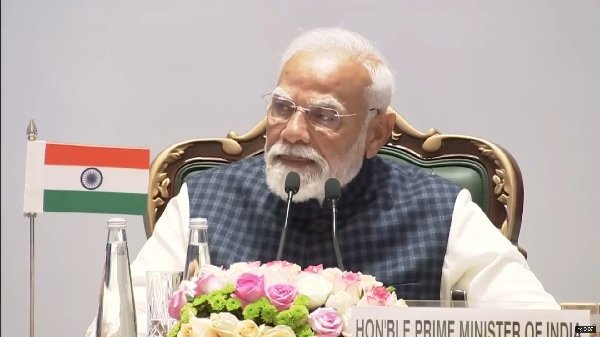
The India-EU Free Trade Agreement took center stage as Prime Minister Narendra Modi addressed the India-European Union Business Forum in New Delhi, calling it the beginning of a “new era” in bilateral relations. With top EU leaders attending India’s Republic Day as Chief Guests and thousands of business leaders present, the moment signaled a strategic alignment between the world’s two largest democracies.
Modi described the agreement as more than a trade deal a framework for deep economic, technological, and societal collaboration between India and the European Union.
Trade and Investment Ties Reach Unprecedented Scale
India-EU trade has doubled over the past decade, touching €180 billion, reflecting rapidly expanding economic engagement. More than 6,000 European companies operate in India, with EU investments exceeding €120 billion.
At the same time, 1,500 Indian firms have established a footprint in the EU, investing nearly €40 billion. Businesses from both regions are increasingly partnering in research, manufacturing, and high-value services.
This growing ecosystem set the stage for what Modi termed a “whole-of-society partnership.”
India-EU Free Trade Agreement to Boost Labour-Intensive Exports
The India-EU Free Trade Agreement is expected to deliver significant gains for sectors that employ millions across India.
Products such as textiles, gems and jewellery, auto components, engineering goods, marine products, fruits, vegetables, and processed foods will see easier access to the EU’s vast consumer market. The services sector including IT, education, traditional medicine, and business services is also poised to benefit.
Modi highlighted that farmers, fishermen, MSMEs, and service providers stand to gain directly from the improved market access.
A Message to Global Business Amid Supply Chain Uncertainty
With global supply chains under strain and trade dependencies being reassessed worldwide, the agreement sends a strong signal of stability. Modi framed the FTA as an invitation for businesses on both sides to build reliable, future-ready partnerships.
He emphasized the need to reduce over-dependence in critical sectors such as electric vehicles, batteries, semiconductors, and APIs, urging industry leaders to co-develop trusted supply chains.
Strategic Cooperation in Defense, Technology, and Green Energy
The Prime Minister outlined three priority areas for deeper collaboration:
1. Trusted Supply Chains
Joint efforts in EV components, chip manufacturing, and critical minerals to de-risk global dependencies.
2. Frontier Technologies and Defense
Partnerships in defense production, space technology, telecom, and artificial intelligence.
3. Clean and Sustainable Growth
Investments in green hydrogen, solar energy, smart grids, small modular reactors, water management, circular economy, and sustainable agriculture.
These sectors, Modi said, could define the next phase of India-EU industrial cooperation.
“The Ball Is in Your Court,” PM Tells Business Leaders
Calling on CEOs and industry heads present at the forum, Modi stressed that businesses must now translate policy into action. He urged companies to leverage the new trade framework to expand investments, innovation, and joint ventures.
“The ball is in your court,” he said, emphasizing that collective enterprise will determine how far the partnership scales.
European Commission President Ursula von der Leyen and leading Indian and European business figures attended the event, underscoring the significance of the moment.
Modi concluded by describing India and the EU as a potential “double engine of global growth,” capable of shaping a more resilient, sustainable, and prosperous global economy.
You May Like
Trending Searches Today |
- Indian Army Launches Bharat Rice for Troops, Signs MoU With FCI
- Odisha Durga Puja Rain Forecast: Low-Pressure System Possible
- IIIT Ranchi Student Found Dead in Hostel, Students Protest
- Odisha Police Tighten Security Ahead of October 15 Student Elections
- US Eases Russian Diesel Sanctions Until April 2027