

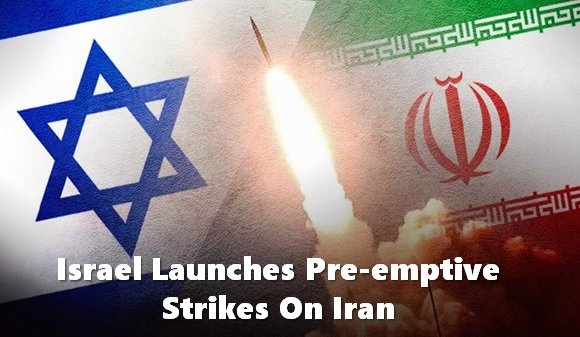

- Multiple explosions reported in central Tehran after Israel confirms pre-emptive strike
- Tensions spike as nuclear talks between Iran and the US stall
- Regional escalation fears grow amid major US military buildup
The Israel Iran pre-emptive strike escalated Middle East tensions sharply on Saturday after multiple explosions were reported across central Tehran. Iranian media said missiles struck several areas of the capital, while Israel confirmed it had launched what it called a defensive, pre-emptive attack aimed at neutralising threats.
At least three blasts were heard in downtown Tehran, with smoke visible over key districts, according to Iranian outlets.
Explosions hit central Tehran districts
Semi-official Iranian media reported missile impacts near University Street and the Jomhouri district. The Fars News Agency said explosions were also heard in the Republic area, a densely populated part of the capital.
There were unconfirmed reports that one strike occurred near offices linked to Iran’s Supreme Leader Ayatollah Ali Khamenei, though Iranian authorities have not issued an official damage assessment.
Israel confirms pre-emptive military action
Israeli Defence Minister Israel Katz said Israel acted to remove imminent threats.
“The State of Israel launched a pre-emptive attack against Iran to remove threats to the State of Israel,” Katz said in a statement, without detailing targets or the scale of the operation.
The announcement marks one of the most direct acknowledgments by Israel of strikes on Iranian territory in recent years.
Nuclear talks breakdown forms backdrop
The strikes come amid stalled negotiations over Iran’s nuclear programme. US President Donald Trump expressed frustration over the lack of progress in talks with Tehran, reiterating that Iran cannot be allowed to develop nuclear weapons.
Recent negotiations in Geneva ended without agreement, with a technical level follow-up meeting planned in Vienna. US officials have reportedly pressed Iran to dismantle facilities at Fordow, Natanz, and Isfahan and move enriched uranium out of the country.
Iran has consistently rejected calls to destroy its nuclear infrastructure, calling them non-starters.
US military buildup adds pressure
The diplomatic impasse has unfolded alongside what US officials describe as the largest American military deployment in the region since 2003. Refueling aircraft and ground-attack planes have been positioned across the eastern Mediterranean, including bases visible from Israel and Greece.
US Secretary of State Marco Rubio said Washington still prefers a negotiated settlement but warned Iran appears to be rebuilding parts of its nuclear capacity.
Vice President JD Vance said any potential US strikes would be limited and aimed at deterrence, dismissing fears of a prolonged regional war.
What happens next in the Israel Iran standoff
Analysts warn the Israel Iran pre-emptive strike raises the risk of miscalculation. While Israel frames the action as defensive, Iran may feel compelled to respond, either directly or through regional allies.
Key uncertainties remain over Washington’s red lines, including whether limited civilian uranium enrichment might be tolerated and how far the US would go to curb Iran’s missile programme and regional influence.
Like this content? Sign up for our daily newsletter to get latest updates. or Join Our WhatsApp Channel
You May Like
Trending Searches Today |
- LPG Ships India Strait of Hormuz: Supply Boost Amid Rising Tensions
- March 24 2026 Daily Horoscope: Love, Money and Career Outlook
- World Water Day 2026 Odisha: ₹2612 Crore Projects Launched to Boost Water Security
- March 23, 2026 Daily Horoscope: Full Predictions for All Zodiac Signs
- March 22, 2026 Daily Horoscope: Balance, Awareness and Smart Choices
Amazon Online Shopping


