
- TPCODL has denied allegations of contractual worker layoffs and says no employees have been retrenched.
- A total of 374 workers have been identified for redeployment, with around 200 already reporting to new assignments.
- The company has asked protesting workers to resume duties by November 15, 2026, warning that alternative arrangements may be made if they fail to return.
Bhubaneswar: Tata Power Central Odisha Distribution Limited (TPCODL) has rejected allegations of mass layoffs among contractual electricity workers, clarifying that no employees have been retrenched and that 374 workers have only been identified for redeployment.
The clarification came amid ongoing protests by contractual electricity workers at Gandhi Marg in Bhubaneswar over employment security, alleged job losses and changes in contractor arrangements.
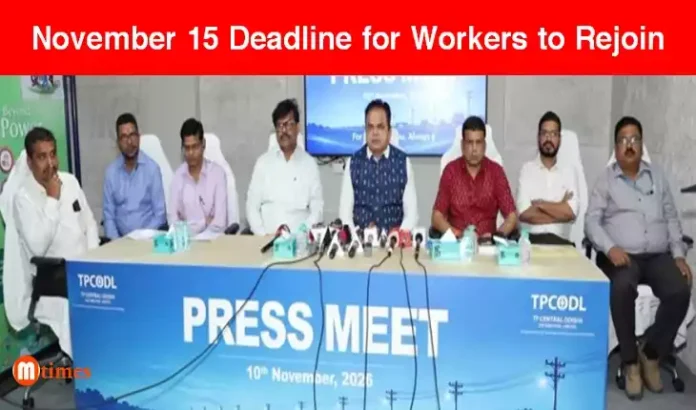
Addressing a press conference at TPCODL’s Technology Centre on Tuesday, November 10, the company’s Odisha Distribution Business Chief and TPCODL CEO, Gajanan S. Kale, said the redeployment exercise was being carried out in accordance with government guidelines and regulatory requirements.
374 Workers Identified for Redeployment
According to the company, around 15,300 contractual workers are currently engaged under TPCODL through its business associates.
Of these, 374 workers have been identified for redeployment to different duty locations. The management said approximately 200 workers had already reported to their new assignments.
The company clarified that the exercise is being carried out through Annual Maintenance Contract (AMC) vendors and does not amount to retrenchment.
TPCODL also stated that its contractual workforce had increased from approximately 6,000 in 2020 to around 15,300 at present, reflecting the expansion of electricity distribution operations and consumer demand.
November 15 Deadline for Workers to Rejoin
TPCODL has asked the remaining workers involved in the ongoing agitation to resume their duties by November 15, 2026.
The management said it remains open to workers willing to return to their assigned locations.
However, it warned that if workers do not report for duty within the stipulated deadline, business associates may have to make alternative arrangements to ensure uninterrupted electricity distribution services.
The company also said that notices had been issued to encourage protesting workers to return to work.
Contractual Workers Continue Protest in Bhubaneswar
The company’s clarification comes amid protests by contractual electricity workers under the banner of the Odisha Bidyut Contract Workers Milita Manch.
The workers have been protesting at Gandhi Marg for more than 40 days, raising concerns over job security, tender-based outsourcing and alleged termination following changes in contractors.
Their demands include reinstatement of affected workers and greater employment security.
The workers’ agitation has also included an indefinite hunger strike, highlighting the continuing disagreement between the protesting employees and the power distribution companies.
Tata Power Discoms Serve Nearly One Crore Consumers
During the press conference, TPCODL officials highlighted the expansion of Tata Power’s electricity distribution operations in Odisha.
The company’s distribution network serves nearly one crore consumers across the state.
According to the management, the total contractual workforce across all four Odisha distribution companies has increased to more than 55,000, more than double its earlier strength.
Officials also highlighted improvements in distribution losses, infrastructure safety and customer services over the past six years.
The company stated that electricity tariffs for general consumers had remained unchanged during this period.
What Happens Next?
The November 15 deadline is likely to be an important point in the ongoing dispute between the company, its business associates and protesting contractual workers.
While TPCODL maintains that no contractual employees have been retrenched, workers continue to demand job security and protection against sudden changes in employment arrangements.
The situation will depend on whether the protesting workers return to their assigned duties and whether further discussions help resolve their concerns.
You May Like