
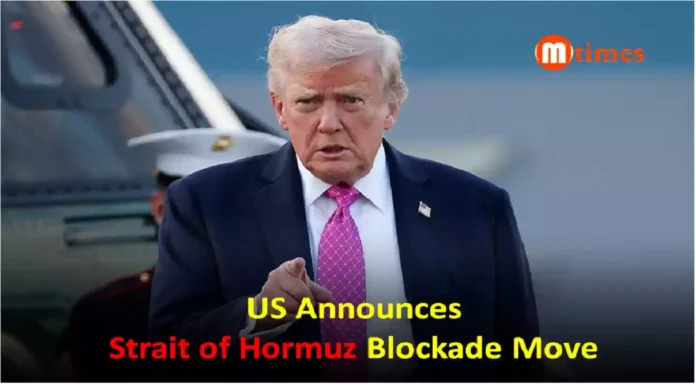

- US plans naval blockade of Strait of Hormuz
- Iran talks collapse without agreement on nuclear issues
- Move could disrupt global oil trade and raise tensions
New York: The US blockade Strait of Hormuz announcement has escalated global tensions after diplomatic talks between the United States and Iran failed to produce an agreement. President Donald Trump confirmed that the US Navy will begin blocking ships linked to Iranian toll payments, signaling a major shift from negotiation to direct pressure.
The decision could have far-reaching consequences for global energy supply and regional stability.
US Blockade Strait of Hormuz Signals Military Escalation
Trump stated that the US Navy will intercept vessels in international waters that are suspected of paying tolls to Iran for passage through the Strait.
He emphasized that operations would begin soon, alongside ongoing efforts to remove naval mines reportedly placed by Iran.
This marks a significant escalation, as the Strait of Hormuz is one of the world’s most critical oil transit routes.
Why US Iran Talks Failed
The blockade decision follows failed negotiations held in Islamabad, Pakistan, where both sides attempted to build on a ceasefire framework.
US officials, including Vice President JD Vance and senior envoys, briefed Trump after discussions broke down.
According to Trump, the key disagreement centered on Iran’s nuclear programme, with Tehran unwilling to make concessions.
Global Impact of Strait of Hormuz Blockade
The Strait of Hormuz handles a major share of global oil shipments, making any disruption a serious concern for international markets.
A blockade could lead to rising oil prices, supply chain disruptions, and heightened geopolitical tensions in the Middle East.
Shipping companies and energy markets are likely to react quickly to any operational changes in the region.
What Happens Next in US Iran Standoff
The situation remains highly volatile, with both military and diplomatic options still on the table.
While the US has moved toward enforcement measures, the possibility of renewed talks cannot be ruled out.
However, continued escalation could draw in regional actors and increase the risk of a broader conflict.
The coming days will be critical in determining whether tensions ease or intensify further.
Also Read | Iran Denies Missile Attacks After US Ceasefire
You May Like
Trending Searches Today |
- India Rejects China Renaming Arunachal as ‘Fictitious’ Claim
- US Blockade Strait of Hormuz Announced After Failed Iran Talks: President Trump
- Asha Bhosle Death Marks End of Golden Era in Indian Music
- Supreme Court SIR Electoral Rolls Case Set for Key Hearing Ahead of Bengal Polls
- Amarnath Yatra 2026 Dates Announced, Registration Starts April 15
Amazon Online Shopping