
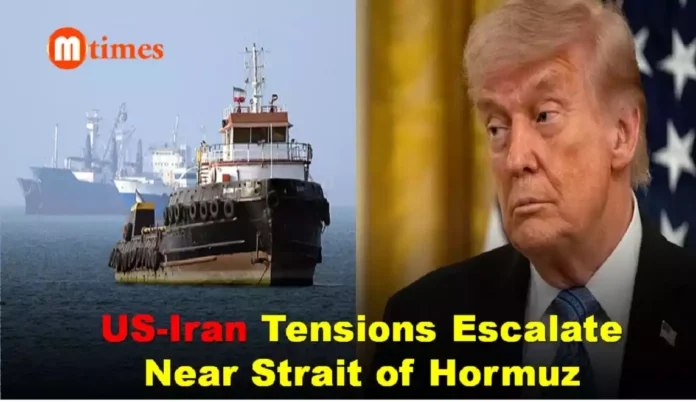

- US and Iranian forces exchanged fresh military strikes near the Strait of Hormuz.
- American forces intercepted missiles and drones launched toward Gulf states.
- Fighting between Israel and Hezbollah is intensifying despite an existing ceasefire.
Washington: The US Iran tensions moved into a more dangerous phase on Friday as military confrontations resumed around the Strait of Hormuz, one of the world’s most strategically important energy corridors. The latest exchange of strikes has increased fears that the Middle East could be edging toward a wider conflict, threatening regional stability and global energy markets.
The developments come as diplomatic efforts remain stalled and multiple flashpoints across the region continue to heat up simultaneously.
US Iran Tensions Put Strait of Hormuz Back in Focus
According to the US Central Command (CENTCOM), Iranian forces launched ballistic missiles and drones toward targets in the Gulf region. American forces reportedly intercepted most of the incoming threats before they could reach Kuwait and Bahrain.
US officials also said several Iranian drones were neutralized after being identified as threats to maritime traffic and military assets operating near the Strait of Hormuz.
Washington subsequently carried out strikes against radar and coastal defense installations in areas overlooking the strategic waterway, describing the operation as a defensive action aimed at protecting commercial shipping routes.
The Strait of Hormuz handles a significant share of the world’s oil exports. Any disruption there can rapidly affect global energy prices, shipping costs and economic stability far beyond the Middle East.
Why the Latest Escalation Matters
The renewed military activity comes at a particularly sensitive moment.
Negotiations between Washington and Tehran remain deadlocked over the release of frozen Iranian assets. Iranian officials have linked progress in talks to the unfreezing of billions of dollars, while American negotiators appear reluctant to make major financial concessions early in the process.
This diplomatic impasse is creating a cycle where military pressure and political negotiations are unfolding simultaneously, increasing the risk of miscalculation.
The second-order effect could be significant. Even limited disruption in the Gulf could push oil prices higher, increase inflationary pressures globally and complicate economic recovery efforts in several countries.
Israel-Hezbollah Violence Adds Another Layer of Risk
While Gulf tensions dominate headlines, another front is becoming increasingly volatile.
Clashes between Israeli forces and the Iran-backed Hezbollah intensified despite an existing ceasefire arrangement between Israel and Lebanon.
Reports from Lebanon indicated that more than twenty people were killed in Israeli strikes in the country’s south, raising concerns that the ceasefire could collapse entirely.
A breakdown of the truce would create another major front in the broader regional confrontation and increase pressure on already fragile diplomatic efforts.
Leaders Exchange Warnings as Diplomacy Stalls
U.S. President Donald Trump has acknowledged that the conflict has entered its third month, while continuing efforts to pursue negotiations alongside military deterrence.
Meanwhile, Iranian officials have warned that any large-scale American military operation could trigger a broader regional response extending beyond the Gulf and affecting critical waterways across the Middle East.
In Lebanon, Joseph Aoun and Abbas Araghchi exchanged public criticism over Tehran’s influence in Lebanese affairs, exposing growing political tensions even among traditional regional partners.
What Comes Next?
The immediate focus will remain on whether diplomatic channels can prevent further escalation around the Strait of Hormuz.
With military operations continuing, ceasefires under strain and negotiations stalled, the region faces a period of heightened uncertainty. Investors, energy markets and governments worldwide are likely to monitor developments closely, as any further deterioration could have consequences far beyond the Middle East.
Also Read | Russia Ready for Ukraine Peace Deal if Kyiv Accepts Compromises: Putin
You May Like
Trending Searches Today |
- Odisha to Launch ‘Ama Rasta’ WhatsApp Chatbot for Road Accident Response
- NSE IPO GMP Falls to ₹55 Ahead of Allotment and Listing
- Odisha Heavy Rain Alert: Bay of Bengal System May Become Deep Depression
- Odisha Final Voter List 2026: 3.16 Crore Electors After SIR, What to Do If Your Name Is Missing
- Mahanadi Water Dispute: Odisha, Chhattisgarh Move Toward Settlement
Amazon Online Shopping