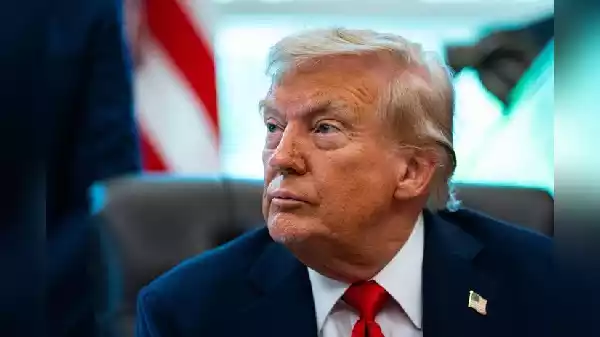

US President Donald Trump on Monday signalled that his administration may soon impose fresh tariffs on Indian rice, intensifying trade tensions between New Delhi and Washington at a time when bilateral negotiations remain stuck without any major breakthrough. Speaking during a meeting at the White House, Trump directly questioned why Indian rice was entering the US market without what he described as adequate tariff barriers, accusing exporters of “dumping” cheap produce that is hurting American farmers.
The remarks come as the US government announced a fresh $12 billion aid package for American farmers, many of whom have complained that imports from countries such as India, Vietnam, and Thailand are undercutting domestic rice prices. Trump’s comments have added fresh uncertainty to the already strained India–US trade relationship, especially with agriculture emerging once again as a key flashpoint.
Trump Tariffs on Indian Rice: President Flags ‘Dumping’ Allegations
During the White House meeting, Trump openly questioned Treasury Secretary Scott Bessent about whether India enjoys any exemption on rice imports. “Why is India allowed to do that? They have to pay tariffs. Do they have an exemption on rice?” Trump asked.
Bessent responded that no such exemption exists and confirmed that trade negotiations with India are still ongoing. Trump, however, insisted that he would “take care” of what he called dumping of Indian rice into the US market. He added that he had heard repeated complaints from farmers about falling prices due to cheap imports.
At this stage, the US President has not specified how high the proposed tariffs on Indian rice could be. His comments, however, indicate a clear shift toward a tougher trade stance on agricultural imports in the coming weeks.
Farmers’ Pressure and Domestic Politics Behind the Tariff Push
Trump’s latest warning comes at a sensitive political moment. American farmers remain one of his core support bases, but they are currently grappling with rising input costs, volatile markets, and the side effects of earlier tariff measures. Many farmers argue that cheaper rice imports are eroding their already tight profit margins.
The US administration is also under growing pressure to rein in inflation and high consumer prices, which continue to weigh heavily on voters. With midterm elections approaching next year, persistent price pressures pose a political risk for Republicans. Trump’s renewed focus on agricultural imports appears aimed at reassuring rural voters that the administration is acting in their interest.
Trump Tariffs on Indian Rice Add to Existing 50% Duty Burden
India is already facing steep trade barriers in the US market. Since August, Washington has imposed a blanket 50% tariff on Indian goods as a punitive measure linked to New Delhi’s continued oil trade with Russia despite the ongoing Ukraine war.
If additional tariffs on rice are introduced, it would further tighten the screws on Indian agricultural exports. Trade analysts warn that fresh duties could hit Indian rice exporters hard, especially since the US is a premium market for basmati and specialty rice varieties. The move could also trigger retaliatory trade measures if negotiations fail to de-escalate the situation.
Agriculture Remains the Biggest Stumbling Block in Talks
Agriculture has long been one of the most contentious issues in India–US trade negotiations. Washington has been pushing New Delhi to open up its tightly regulated farm sector to greater foreign access, while India has consistently resisted, citing food security, farmer livelihoods, and domestic political sensitivities.
According to earlier reports, this disagreement stalled progress in recent trade rounds. A US delegation is now expected to visit India later this week for further discussions, but officials on both sides admit that no significant breakthrough has yet been achieved. With Trump now openly raising the tariff threat, the upcoming talks are likely to be more tense and closely watched.
What Trump’s Latest Warning Means for India
For India, the prospect of additional US tariffs comes at a challenging time, as exporters are already adjusting to higher duties and uncertain global demand. Fresh restrictions on rice could disrupt supply chains, impact farm incomes, and complicate broader trade diplomacy with Washington.
For the US, tighter import controls may provide temporary relief to domestic farmers, but economists caution that further tariffs could also add to retail food inflation—an issue that already worries American consumers.
As trade negotiators prepare for another round of talks, Trump’s sharp warning has made one thing clear: agriculture, especially rice, is now back at the centre of the India–US trade confrontation.
Get Latest News Live on MTIMES along with Breaking News and Top Headlines, Political News and around The World.
You May Like
Trending Searches Today |
India fake news regulations: Government Stresses on Legal action to Curb Fake News and Deepfakes
PM Modi Welcomes India’s Robust 8.2% GDP Growth in Q2 2025-26
UN Warns Pakistan Of Serious Consequences Over New Constitutional Amendments
Kriti Sanon and Dhanush Visit Pune’s Dagdusheth Temple as ‘Tere Ishk Mein’ Shines at Box Office
WhatsApp, Telegram Must Enforce SIM Binding Under New Government Rules