
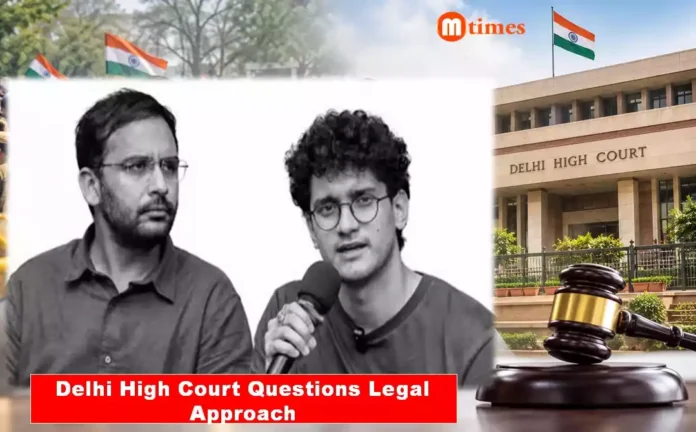

- Saurav Das and Ashutosh Ranka withdrew their challenge to the extension of their judicial custody before the Delhi High Court.
- The court advised them to await the magistrate’s proceedings and consider other legal options if necessary.
- The withdrawal did not determine whether the custody order or rejection of their sureties was legally justified.
New Delhi: Cockroach Janta Party (CJP) leaders Saurav Das and Ashutosh Ranka withdrew their petition challenging the extension of their judicial custody on October 21 after the Delhi High Court questioned their decision to approach it directly. The court advised them to await proceedings before the Special Executive Magistrate and consider other legal remedies if necessary.
The withdrawal was a procedural development and did not amount to a final decision on the legality of the custody order.
Delhi High Court Questions Legal Approach
Justice Subramonium Prasad heard the petition filed by Das and Ranka against an October 19 order extending their custody by two days, until October 21.
During the hearing, the court questioned whether the petitioners should have approached the High Court before exhausting the available legal remedies. It indicated that a challenge before the appropriate revisional court could be a suitable next step.
The judge also raised questions about the circumstances surrounding an earlier peace bond and the alleged breach of its conditions. The observations came amid proceedings concerning the activists’ detention following a protest at Jantar Mantar.
The court permitted the petitioners to withdraw their plea without deciding whether the custody order was legally valid.
Why Were Saurav Das and Ashutosh Ranka Detained?
The two CJP leaders were taken into custody on October 13 after allegedly entering the barricaded premises at Jantar Mantar during a protest. The site had previously been removed from the list of designated protest locations.
The demonstration was connected to demands directed at Chief Election Commissioner Gyanesh Kumar. According to reports, protesters also raised slogans and displayed the national flag.
Delhi Police alleged that the demonstrators entered the restricted area and obstructed police personnel performing their official duties. These allegations should not be treated as established guilt.
Das and Ranka were subsequently placed in judicial custody for five days. On October 19, the Special Executive Magistrate extended their custody by another two days.
Dispute Over Sureties and Continued Custody
The petition challenged the magistrate’s decision to reject the sureties submitted on behalf of the two activists and extend their custody.
Their lawyer, Abhik Chimni, argued that the October 19 order lacked a proper legal basis. He also questioned the magistrate’s authority to extend their detention and contended that the sureties had not been assessed appropriately.
According to the defence, the reasons cited for rejecting the sureties included discrepancies between a person’s photograph and identity document, as well as difficulties verifying another person’s details.
The magistrate’s order, however, recorded concerns about the suitability of the sureties and whether they could ensure the petitioners’ appearance before the authority.
The dispute therefore involves both the legality of the custody extension and the procedures used to assess the sureties. The High Court’s decision to allow withdrawal of the petition did not settle these questions.
What Happens Next in the Case?
The High Court advised Das and Ranka to await the outcome of the proceedings before the Special Executive Magistrate. If they remain dissatisfied with the decision, they may pursue the legal remedies available to them.
The immediate outcome of the hearing was procedural rather than a decision granting or denying relief on the merits of the challenge. The withdrawal also did not establish that the custody order was lawful or unlawful.
The case highlights the legal questions that can arise when authorities use preventive proceedings to address concerns about public order and compliance with protest restrictions. It also underscores the importance of following the appropriate legal process when challenging detention.
The next steps depend on the proceedings before the magistrate and any further legal challenge the activists may choose to pursue.
You May Like
Amazon Online Shopping