
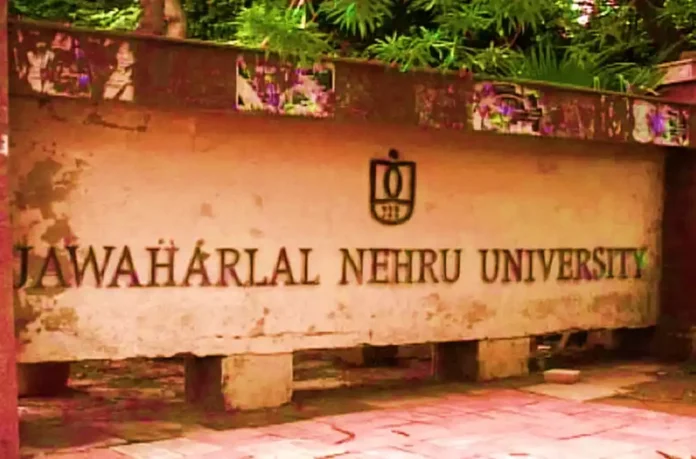

- The JNU administration has held talks with students participating in the indefinite hunger strike.
- The dispute covers rustication orders, the CPO Manual, GSCASH, JNUEE, hostel allotment and campus welfare.
- The key challenge is reaching a concrete agreement that addresses the students’ concerns.
New Delhi: The Jawaharlal Nehru University (JNU) administration has held two rounds of discussions with students participating in an indefinite hunger strike, bringing renewed attention to a dispute over disciplinary action, academic policies and student welfare. The negotiations come amid continuing differences between the university administration and the Jawaharlal Nehru University Students’ Union (JNUSU) over a series of demands.
JNU Hunger Strike Continues Amid Unresolved Demands
The student protest began on October 3, 2026, with JNUSU representatives and other students demanding action on 13 issues concerning academic procedures, campus facilities, social justice and student representation.
JNUSU president Aditi Mishra, vice-president K. Gopika Babu and general secretary Sunil Yadav are among those participating in the indefinite hunger strike.
The union has maintained that the administration needs to provide concrete commitments on its demands. Although discussions have taken place, the two sides have yet to announce a comprehensive settlement covering all the outstanding issues.
The prolonged agitation has also raised concerns about the well-being of students continuing the fast.
What Are the Students Demanding?
The students have submitted a charter of 13 demands covering several aspects of university administration and campus life.
Key demands include the withdrawal of the Chief Proctor Office (CPO) Manual, revocation of rustication orders against student union office-bearers, restoration of the Gender Sensitisation Committee Against Sexual Harassment (GSCASH) and reinstatement of the JNU Entrance Examination (JNUEE).
The union has also raised concerns about hostel allotment procedures, reservation provisions and campus infrastructure.
JNUSU argues that these matters affect students’ academic opportunities, welfare and participation in university governance. The administration’s response to the demands remains central to efforts to resolve the ongoing confrontation.
Earlier Discussions Failed to Bridge Differences
A previous round of negotiations on October 12 reportedly covered several major issues raised by the students.
According to the union’s account, the administration agreed to examine concerns relating to the CPO Manual and alleged irregularities in hostel allotments. However, students said they did not receive comprehensive assurances regarding rustication orders or the restoration of GSCASH.
The administration also reportedly cited funding constraints in response to the demand for reinstating JNUEE.
JNUSU maintained that further examination of the issues would not be sufficient without clear commitments and concrete steps towards resolution.
The latest reported discussions indicate that dialogue between the administration and students remains an important part of the process, although the precise outcome of the two rounds needs to be distinguished from any final agreement.
Disciplinary Action Remains a Major Point of Dispute
The revocation of disciplinary action against student representatives is among the central demands behind the protest.
The dispute has brought questions about university disciplinary procedures, student representation and the handling of campus demonstrations into focus.
JNU has also asked JNUSU president Aditi Mishra to appear before a proctorial committee on October 22 in connection with allegations relating to a September 8 protest. The allegations include manhandling security personnel and damaging campus property. These remain allegations to be addressed through the university’s proceedings.
The continuing disagreement illustrates the challenges facing the administration and student representatives as they seek a resolution within the university’s established rules and procedures.
GSCASH and JNUEE Among Key Issues
The demand to restore GSCASH concerns the university’s institutional arrangements for addressing sexual harassment complaints and promoting gender-sensitive campus practices.
The students have also called for the restoration of JNUEE, highlighting their concerns about university admission procedures. The administration’s reported reference to funding constraints suggests that financial and administrative considerations form part of the disagreement over this demand.
Both issues have implications beyond the immediate protest, affecting students’ confidence in campus safeguards and the clarity of academic admission processes.
Any resolution will require clear communication about the university’s position and the practical steps, if any, it intends to take.
You May Like
Trending Searches Today |
- JNU Hunger Strike: Administration Holds Talks With Students

- Tiger Shroff Firing Incident: Three Suspects Arrest in Kota Railway Station
- Odisha Weather Latest Update: IMD Issues Yellow Warning for Rain and Thunderstorms


Amazon Online Shopping