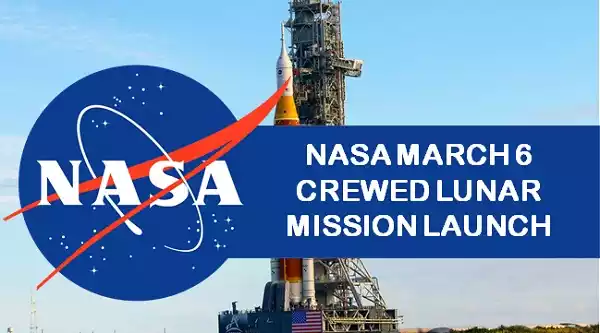

- NASA is aiming for a March 6 launch following a successful wet dress rehearsal.
- Hydrogen leaks detected earlier have been fully resolved, officials confirmed.
- Astronauts will soon enter soft quarantine ahead of final flight clearance.
NASA March 6 crewed lunar mission launch plans are back on track after engineers successfully completed a critical wet dress rehearsal and fixed fuel leaks that had delayed earlier testing. The milestone clears a major hurdle for the agency’s next step toward sustained human exploration of the Moon.
Officials said the latest countdown simulation showed no recurrence of the hydrogen leak issues that previously forced a postponement.
Wet Dress Rehearsal Clears Major Technical Hurdle
The wet dress rehearsal, a full launch-day simulation involving the loading of super-cooled propellants, was completed this week without incident. During an earlier attempt, engineers detected hydrogen leaks, prompting an extensive technical review and repairs.
According to NASA, subsequent testing confirmed the fixes were effective, allowing the mission timeline to move forward.
NASA March 6 Crewed Lunar Mission Launch Enters Review Phase
With the rehearsal complete, NASA teams will now conduct an exhaustive system-by-system analysis of the launch vehicle. This review will culminate in a formal Flight Readiness Review (FRR), expected to conclude by the end of next week.
Mission managers, engineers, and safety officials will evaluate data from the wet test alongside other performance checks before granting final approval for liftoff.
Space Launch System and Orion at the Core of the Mission
The astronauts will fly aboard the Orion spacecraft, launched by NASA’s Space Launch System. The SLS is the most powerful rocket ever built by the agency and forms the backbone of its lunar exploration strategy.
The mission is a key part of NASA’s long-term goal to establish a sustained human presence on the Moon, laying groundwork for future deep-space exploration.
Astronaut Safety Remains Top Priority
NASA reiterated that safety remains paramount. Teams will scrutinise propulsion, avionics, life-support systems, and ground operations before certifying the vehicle for flight.
In parallel, the astronaut crew will soon enter a “soft quarantine,” a standard precaution to reduce exposure to illness and ensure peak health ahead of launch.
If the remaining reviews proceed as planned, the March 6 window could mark a significant milestone in NASA’s return to the Moon.
You May Like
Trending Searches Today |
- Best Induction Cooktops in India That Save Electricity in Gas Shortage
- Train Seat Argument Viral Video Sparks Debate on Public Transport Behaviour
- Odisha Ration Card Cancellation: 34,939 Ineligible Cards Scrapped
- LPG Shortage in India: Government Assures Adequate Supply and Urges Public Not to Panic
- LPG, Petrol and Diesel stocks are sufficient across the state: Odisha Government
Amazon Online Shopping