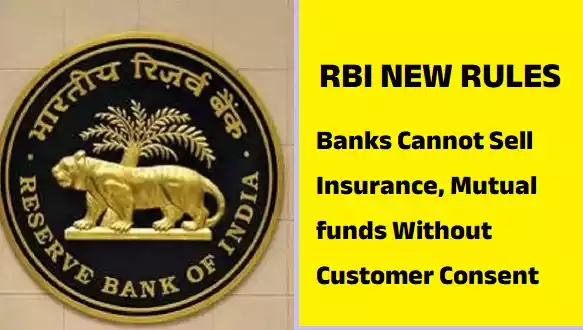

- RBI proposes banning incentives from third parties to bank staff for selling financial products.
- Banks barred from using “dark patterns” to nudge customers into unwanted purchases.
- Mandatory refunds and compensation ordered in proven mis-selling cases.
MUMBAI: The RBI ban on mis-selling incentives marks a major regulatory push to protect consumers from aggressive and deceptive sales practices in the banking system. The Reserve Bank of India has proposed prohibiting bank employees from receiving any incentives directly or indirectly from third parties for selling insurance, mutual funds and other financial products.
The draft rules are aimed at curbing widespread mis-selling and restoring customer trust in banks’ marketing and sales practices.
RBI Ban on Mis-Selling Incentives Targets Third-Party Commissions
Under the Draft Amendment Directions on Advertising, Marketing and Sales of Financial Products and Services by Regulated Entities, the RBI stated that bank staff engaged in marketing or sales must not receive any form of incentive from third-party product providers.
“It shall be ensured specifically that no incentive is directly or indirectly received by employees engaged in marketing or sales of third-party products or services from the third party,” the draft directions said.
The central bank also prohibited banks from bundling third-party products with their own offerings. If a bank product is made contingent on purchasing a third-party product, customers must be allowed to buy that product from any other provider of their choice.
Dark Patterns Banned on Bank Digital Platforms
In a significant move, the RBI has barred the use of “dark patterns” on commercial banks’ websites and mobile applications. Dark patterns are deceptive design techniques that manipulate users into actions they did not intend to take.
Also Read | India Cybercrime Crackdown: 12 Lakh SIM Cards Cancelled, Over 20,000 Arrested: Amit Shah
The RBI defined dark patterns as practices that subvert consumer autonomy or decision-making, amounting to misleading advertising, unfair trade practices or violation of consumer rights. Banks will now be required to ensure that digital interfaces are transparent and do not nudge customers toward unintended purchases.
Mandatory Refunds and Stronger Complaint Redressal
To strengthen consumer protection, the RBI mandated that banks must refund the entire amount involved in cases where mis-selling is established. Customers must also be compensated for any financial losses in accordance with approved internal policies.
Customers can lodge complaints regarding mis-selling within timelines prescribed by sectoral regulators. Where no timeline exists, complaints can be filed within 30 days of receiving the signed agreement or terms and conditions, the draft clarified.
Feedback, Sales Practices and DSA Conduct Norms
The draft directions require banks to seek customer feedback within 30 days of any sale to confirm that the customer understands the product’s features and risks. Banks must also prepare half-yearly reports on customer feedback for internal policy review.
The RBI cautioned banks against practices such as internal sales competitions that could encourage aggressive selling or mis-selling by employees or direct sales agents (DSAs). Clear conduct norms have also been set for DSAs, with telephonic calls and visits restricted to between 9 am and 6 pm unless explicit customer consent is obtained.
Push for Fair, Transparent Banking
The proposed measures reflect the RBI’s broader effort to align banking practices with consumer rights, transparency and ethical sales conduct. Once finalised, the new rules are expected to significantly reshape how banks market and sell financial products, placing customer interest firmly at the centre of the system.
You May Like
Trending Searches Today |
- US President Trump Says Iran War Will End ‘Very Quickly’, Promises Lower US Fuel Prices
- Braj Mohan Ram Sworn In as New Odisha Governor
- Gwalior Truck Accident: 14 Dead, Around 40 Injured as Truck Hits Devotees
- ED Widens Odisha SI Exam Paper Leak Probe, Examines Recruitment Board Officials
- Kolkata Durga Puja Stampede Kills 19, 25 Injured; CM Announces Rs 25 lakh Aid and Government Jobs
Amazon Online Shopping