
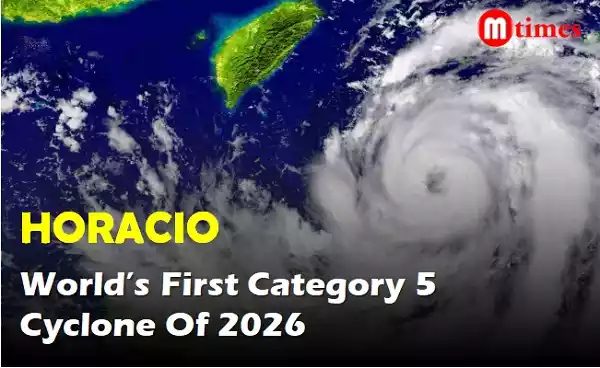

- Cyclone Horacio has intensified into the world’s first Category 5 storm of 2026
- Wind speeds surged from 104 km/h to 257 km/h in just 24 hours
- Storm is currently over the South Indian Ocean, south of Madagascar
The world’s first Category 5 cyclone of 2026 has formed in the Indian Ocean, as Tropical Cyclone Horacio underwent explosive strengthening to reach the most destructive category on the Saffir–Simpson scale. With sustained winds exceeding 252 km/h, Horacio is now the strongest tropical cyclone on Earth this year, drawing global attention from meteorologists and climate scientists alike.
From Severe Storm to Category 5 in 24 Hours
Horacio’s transformation has been exceptionally rapid and intense.
- Wind speeds jumped from around 104 km/h to nearly 257 km/h within a single day
- Central pressure plunged sharply from 963 millibars to 930 millibars
- Satellite imagery shows a clear, well-defined eye, a classic indicator of a Category 5 system
Such rapid intensification is considered dangerous because it leaves little time for warning or preparedness.
What Does Category 5 Mean?
A Category 5 cyclone represents the highest and most destructive level of tropical storms.
- Sustained winds of 157 mph (252 km/h) or more
- Capable of catastrophic damage to infrastructure
- Coastal regions can become uninhabitable for weeks or months
- Extreme storm surge, destructive waves, and prolonged power outages are common
Horacio now firmly sits in this top-tier classification.
Current Location and Threat Assessment
Cyclone Horacio is currently spinning over the South Indian Ocean, positioned south of Madagascar.
- India is not in the storm’s projected path
- No immediate landfall threat has been issued so far
- However, dangerous seas, high waves, and rough weather could impact nearby island nations and shipping routes
Meteorological agencies continue to closely monitor its movement and intensity.
Why Cyclone Horacio Matters
This storm is significant beyond its immediate location.
- First Category 5 cyclone of 2026, setting an early warning for an active season
- Demonstrates how quickly storms can intensify under favourable conditions
- Reinforces concerns that warmer ocean waters are fueling stronger cyclones
Scientists increasingly link such rapid intensification to rising sea surface temperatures driven by climate change.
Why Cyclone Horacio Matters
This storm is significant beyond its immediate location.
- First Category 5 cyclone of 2026, setting an early warning for an active season
- Demonstrates how quickly storms can intensify under favourable conditions
- Reinforces concerns that warmer ocean waters are fueling stronger cyclones
Scientists increasingly link such rapid intensification to rising sea surface temperatures driven by climate change.
The emergence of the world’s first Category 5 cyclone of 2026 highlights how climate change is reshaping storm behaviour. Even without threatening land directly, Cyclone Horacio underscores the growing risks posed by a warming planet and the urgency of global readiness for extreme weather.
FAQs: World’s First Category 5 Cyclone of 2026 Cyclone Horacio
Cyclone Horacio is a powerful tropical cyclone that has intensified into a Category 5 storm, making it the world’s first Category 5 cyclone of 2026.
Horacio is significant because it intensified extremely rapidly and is the strongest storm recorded globally so far in 2026, highlighting a potentially active cyclone season.
The cyclone is currently over the South Indian Ocean, positioned south of Madagascar.
No. India is not in the direct path of Cyclone Horacio, and there is currently no landfall threat to India.
Horacio strengthened from around 104 km/h to 257 km/h within 24 hours, a phenomenon known as rapid intensification.
A Category 5 cyclone has sustained winds of 252 km/h (157 mph) or higher, capable of causing catastrophic damage.
Meteorologists believe very warm ocean waters, low wind shear, and favourable atmospheric conditions contributed to its explosive intensification.
While no immediate landfall is forecast, nearby island nations and shipping routes could experience dangerous seas, high waves, and severe weather conditions.
Scientists suggest that warming ocean temperatures linked to climate change are increasing the likelihood of stronger and faster-intensifying cyclones like Horacio.
The storm underscores the need for improved forecasting, early warning systems, and coastal preparedness, as extreme cyclones are becoming more intense and unpredictable.
Like this content? Sign up for our daily newsletter to get latest updates. or Join Our WhatsApp Channel
You May Like
Trending Searches Today |
- JioHotstar Launches in Canada, UK and Singapore
- OTET Result 2026 Out, Check Odisha TET Result Here
- Antonio Guterres to Attend 18th BRICS Summit in Delhi
- Tamil Nadu to Withdraw Protest Cases Against Farmers, Teachers
- Odisha PUCC Fine Cut to Rs 6,000 for Vehicle Owners
Amazon Online Shopping