
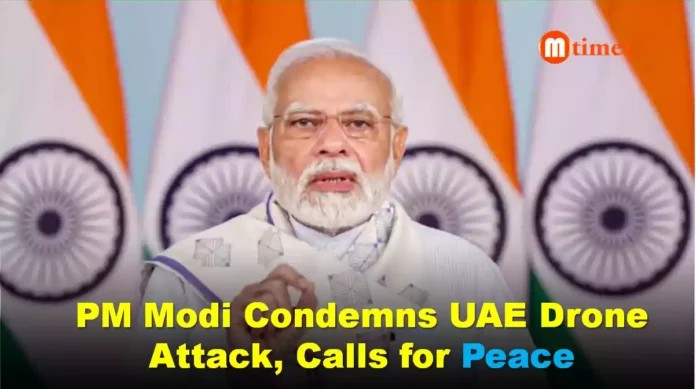

- PM Modi condemned the attack on UAE energy infrastructure
- India stressed protection of civilians and maritime routes
- Call for diplomacy amid rising West Asia tensions
New Delhi: Prime Minister Narendra Modi strongly condemned the recent drone strike on the Fujairah Petroleum Industries Zone in the United Arab Emirates, describing the targeting of civilians and critical infrastructure as “unacceptable.”
The Modi condemns UAE drone attack response came after the incident left three Indian nationals injured, triggering concern over safety, energy security, and escalating tensions in West Asia.
Strong Message of Solidarity with UAE
In his statement, Modi reaffirmed India’s support for the United Arab Emirates, emphasizing that India stands in “firm solidarity” with the UAE during this period of heightened tension.
He underlined that attacks on civilian infrastructure cross a red line, reinforcing India’s consistent position against such actions.
Focus on Strait of Hormuz Security
A key highlight of Modi’s response was the strategic importance of the Strait of Hormuz.
He stressed that ensuring “safe and unimpeded navigation” through this crucial maritime corridor is essential not only for regional stability but also for global energy security.
This is particularly significant for India, which relies heavily on oil imports passing through the Strait of Hormuz.
Diplomatic Solution Over Escalation
India’s position remains firmly anchored in dialogue and diplomacy.
Echoing the Prime Minister’s remarks, the Ministry of External Affairs called for an immediate halt to hostilities and reiterated that peaceful engagement is the only viable path forward.
New Delhi has consistently advocated restraint in West Asia, even as tensions between regional powers continue to rise.
Why This Incident Matters Globally
The Fujairah attack highlights a broader risk, strategic energy infrastructure is increasingly becoming a target in geopolitical conflicts.
Any disruption in this region can: Impact global oil prices, disrupt shipping routes, and trigger wider economic uncertainty.
Although responsibility has not been officially confirmed, suspicion around Iranian involvement adds another layer of geopolitical sensitivity.
India’s Strategic Balancing Act
India maintains strong ties across West Asia, including with Gulf nations and Iran.
This makes its response particularly calibrated, firm on principles like civilian safety and maritime security, while avoiding direct escalation.
The PM Modi condemns UAE drone attack statement reflects India’s dual priorities, safeguarding its citizens and energy interests while promoting regional stability through diplomacy.
As tensions in West Asia continue to simmer, India’s emphasis on dialogue, security of trade routes, and strategic neutrality will remain central to its foreign policy approach.
Also Read | Trump Iran Peace Proposal Resistance Deepens as Nuclear Deadlock Blocks Ceasefire
You May Like
Trending Searches Today |
- Mirzapur: The Movie Review and Cast
- IDCO Approves Land for 37 Industrial Projects in Odisha
- Nuakhai 2026 Lagna Fixed for September 15 in Sambalpur
- Mithun Chakraborty Named Bengal Government Cultural Advisor
- Janmashtami 2026 in Odisha: Puri, Bhubaneswar Celebrations
Amazon Online Shopping