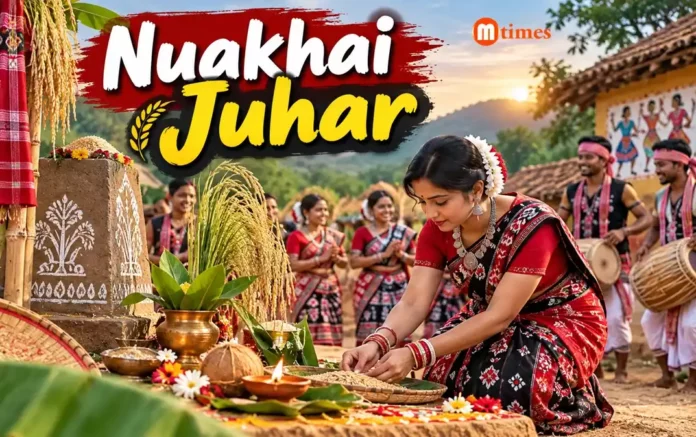

- Western Odisha is celebrating Nuakhai with new rice, traditional rituals and family gatherings.
- The festival reflects the deep relationship between agriculture, land, farmers and society.
- Nuakhai Juhar, Nuakhai Bhetghat, Sambalpuri songs and traditional dances are central to the celebrations.
Sambalpur: A festive atmosphere has gripped Western Odisha as people celebrate the much-awaited Nuakhai festival with new rice, renewed hopes and enthusiasm.
The agrarian festival reflects the close relationship between agriculture, land and people. It is also an occasion for families, relatives, friends and neighbours to come together and strengthen social bonds.
Nuakhai Festival Reflects Odisha’s Agrarian Tradition
Nuakhai symbolises gratitude towards agriculture and the land. Before consuming the first harvest of their labour, farmers offer the new crop to their presiding deities as an expression of gratitude.
The main attraction of the festival is the Maa Samaleswari Peetha in Sambalpur, where the traditional observance holds special significance.
After the offering, family members offer the new rice preparation to their respective presiding and village deities before sharing the food together.
What Does Nuakhai Mean?
The word Nuakhai refers to eating the new harvest. However, the significance of the festival extends beyond the consumption of newly harvested rice.
Nuakhai brings families together, strengthens brotherhood and carries a message of leaving behind past differences while beginning relationships with renewed warmth.
Nuakhai Juhar Strengthens Family and Social Bonds
One of the important traditions following the new harvest offering is Nuakhai Juhar.
Younger members of families offer juhar to elders and receive their blessings. Friends, relatives and neighbours also greet one another with Nuakhai Juhar.
The festival also sees family members who live away from their homes returning to celebrate the occasion with their loved ones.
Nuakhai Celebrated Across Western Odisha
While Sambalpur remains one of the major centres of Nuakhai celebrations, the festival is observed across several districts of Western Odisha.
These include Bargarh, Balangir, Subarnapur, Jharsuguda, Kalahandi, Nuapada, Sundargarh, Boudh and Deogarh.
Homes are cleaned and decorated, people wear new clothes and families prepare traditional food as part of the celebrations.
Offerings to Presiding Deities
The tradition of offering the new harvest to local presiding deities is observed in different ways across the region.
Special Nuakhai traditions are associated with Maa Samaleswari in Sambalpur, Maa Pataneswari in the Balangir-Patnagarh area, Maa Sureswari in Subarnapur and Maa Manikeswari in Kalahandi.
Nuakhai Bhetghat Brings People Together
After Navanna and Juhar, Nuakhai Bhetghat becomes an important part of the celebrations.
Western Odisha comes alive with Sambalpuri songs and dances accompanied by traditional instruments such as dhol, nishan and tasar.
Folk dances including Dalkhai and Rasarkeli, along with other cultural programmes, add to the festive atmosphere.
Nuakhai Is More Than a Festival
The Nuakhai festival brings together several important values respect for the land, recognition of farmers’ hard work, gratitude towards presiding deities and the importance of family and community.
For the people of Western Odisha, Nuakhai is therefore more than a celebration of the new harvest. It represents a way of life rooted in agriculture, tradition, family relationships and social harmony.
You May Like
Trending Searches Today |
- Odisha Plans New ABADHA-Like Scheme for Puri Development
- IMD Thunderstorm Alert: 25 Odisha Districts on Watch
- BJD Says It Maintains Distance From BJP and Congress, Not Part of INDIA Bloc
- Puri Records 36.6°C as Heat and Humidity Persist, Coastal Odisha To Face Intense Heat
- West Bengal to Recruit 14,454 Government Post, To Provide Rs 50,000 For Unmarried Women
Amazon Online Shopping