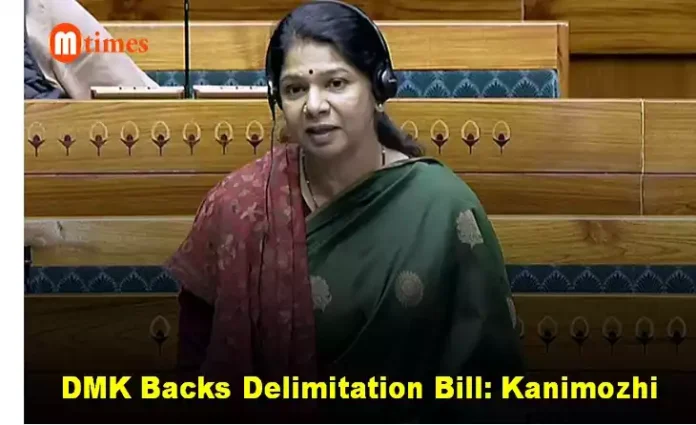

- Kanimozhi Karunanidhi said the party supports the revised Delimitation Bill because its key demands have been addressed.
- The state’s Lok Sabha representation could rise from 39 to 59 under the proposal.
- The DMK says the proposed freeze based on the 1971 population figures will protect Tamil Nadu’s share of parliamentary representation.
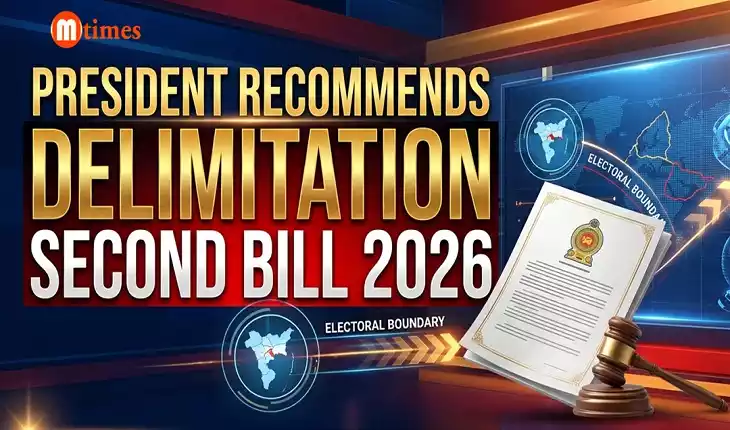
New Delhi, November 29, 2026: Dravida Munnetra Kazhagam (DMK) MP Kanimozhi Karunanidhi has defended her party’s decision to support the Centre’s proposed Delimitation Bill, saying the revised legislation safeguards Tamil Nadu’s interests and addresses concerns raised by the state over parliamentary representation.
Kanimozhi said the DMK decided to back the proposal after the Centre incorporated key demands made by the party, including using the 1971 population figures as the basis for seat allocation and maintaining the arrangement for the next 25 years.
She said Tamil Nadu’s representation in the Lok Sabha could increase from the existing 39 seats to 59 under the proposed framework.
DMK Communicates Its Decision to Amit Shah
A delegation of DMK MPs led by Kanimozhi met Union Home Minister Amit Shah in New Delhi on Saturday to formally communicate the party’s decision.
The decision followed a meeting of DMK MPs chaired by party president and Tamil Nadu Chief Minister MK Stalin.
Speaking to reporters, Kanimozhi said the party had consistently demanded a fair delimitation process that would not reduce Tamil Nadu’s share of parliamentary representation.
She maintained that the DMK had not changed its position on delimitation. Instead, the party had supported the revised proposal because its concerns and demands had been addressed.
Why the 1971 Census Matters to Tamil Nadu
The DMK had expressed concern that a delimitation exercise based on more recent population figures could reduce the relative parliamentary representation of southern states.
The party argued that states such as Tamil Nadu should not be disadvantaged for successfully implementing population-control measures.
Kanimozhi said the Centre had agreed to use the 1971 population figures as the basis for the proposed increase in parliamentary seats. She also highlighted the proposed 25-year freeze on the allocation arrangement.
According to her, these safeguards would protect Tamil Nadu’s interests while allowing the overall number of parliamentary seats to increase.
The DMK has maintained that the state’s share of Lok Sabha representation must not decline as part of the exercise.
Tamil Nadu’s Lok Sabha Seats May Rise to 59
Under the proposed framework, Tamil Nadu’s Lok Sabha representation is expected to increase from 39 to 59 seats, Kanimozhi said.
The increase is linked to the proposed expansion of parliamentary representation across states.
The Centre’s revised delimitation proposal is part of a wider legislative package connected with the implementation of 33 per cent reservation for women in Parliament and state legislative assemblies.
The proposed changes are expected to be taken up during the upcoming parliamentary sitting beginning November 30.
DMK Flags Concerns Over Delimitation Commission
Although the DMK has announced its support, the party has also raised concerns about how the proposed Delimitation Commission will function.
According to reports, the delegation discussed safeguards against possible gerrymandering while constituencies are redrawn within individual states.
The party has also sought adequate representation of states in the proposed commission. These concerns are significant because delimitation involves not only the allocation of seats among states but also the redrawing of individual constituencies.
The DMK is expected to examine the detailed legislative provisions and raise concerns during parliamentary proceedings if necessary.
Support for Bill Does Not Mean Political Alliance
Kanimozhi rejected suggestions that the DMK’s support for the Delimitation Bill indicated a possible political understanding or alliance with the BJP.
She said supporting a particular piece of legislation should not be interpreted as joining hands politically with the ruling party.
She cited the example of other parties supporting legislation introduced by governments with which they do not share political alliances.
The development has also exposed differences within the Opposition INDIA bloc over the proposed delimitation exercise. While several Opposition parties have expressed reservations, the DMK has decided to support the revised proposal, arguing that it protects Tamil Nadu’s representation.
You May Like