
- Live air-quality trackers reported Bhubaneswar’s AQI crossing 1,200 on Diwali night, with one report citing a peak of 1,444.
- CPCB data cited by PTI recorded Bhubaneswar’s average AQI at 206 at 11:30 am on November 9.
- High pollution exposure can affect children, elderly people and those with respiratory or cardiovascular conditions.
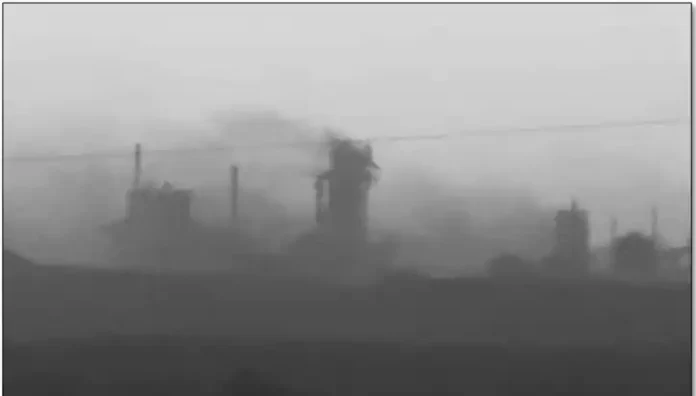
Bhubaneswar: Air pollution in Odisha’s capital Bhubaneswar reached alarming levels following Diwali celebrations night, with the Air Quality Index (AQI) crossing the 1,200 mark on some real-time air-quality tracking platforms.
The sharp rise was reported amid widespread firecracker bursting across the city. The pollution spike raised concerns over the impact of festive celebrations on public health, particularly among children, elderly people and individuals with respiratory conditions.
According to data reported by AQI.in, Bhubaneswar’s AQI reached 1,091 around 9 pm on November 8 and climbed to approximately 1,254 by 9:30 pm. Another report citing the same platform recorded a peak of 1,444 around 11 pm.
Firecrackers Push Pollution Levels Sharply Higher
Air-quality readings reportedly increased rapidly after evening celebrations began.
According to the reported AQI.in figures, the city’s AQI stood at around 258 at 7 pm before rising to 859 by 8:30 pm. It crossed 1,000 around 9 pm as firecracker smoke accumulated in the atmosphere.
At around 9 pm, PM2.5 concentration was reported at 622 micrograms per cubic metre, while PM10 levels reached approximately 750 micrograms per cubic metre.
PM2.5 refers to fine particles that can penetrate deep into the lungs. High exposure may aggravate respiratory problems and affect cardiovascular health.
Official CPCB Reading Shows Poor Air Quality on Monday
While live trackers reported extreme pollution levels during Diwali night, official monitoring data presented a different picture on Monday morning.
According to the Central Pollution Control Board (CPCB) data, Bhubaneswar recorded an average AQI of 206 at 11:30 am on November 9, placing the city in the ‘poor’ category under India’s national AQI classification.
The Odisha State Pollution Control Board also reported elevated readings in other cities. Kataka recorded an AQI of 192, while Anugolo registered 186. Where as Talcher reported 281, placing it in the poor category.
The difference between the very high live-tracker readings and the official CPCB figure should be understood in the context of different monitoring platforms, reporting periods and AQI scales. The figures are not directly interchangeable.
Late-Night Firecracker Bursting Raises Questions
The Odisha government had permitted green and environment-friendly firecrackers during a restricted evening time window on Diwali.
However, reports indicated that firecrackers continued to be burst in several areas beyond the permitted period, contributing to concerns over pollution levels.
Low wind movement and the accumulation of smoke can also affect how quickly pollutants disperse from the atmosphere.
Health Risks for Children and Elderly People
High concentrations of particulate matter can cause eye irritation, coughing, throat discomfort and breathing difficulties. People with asthma, chronic respiratory conditions and heart-related illnesses may be particularly vulnerable.
Children and elderly people are also at greater risk from exposure to polluted air.
Residents are advised to avoid unnecessary outdoor activities when pollution levels are high, keep windows closed during periods of heavy smoke and use a well-fitted N95 mask if going outdoors is unavoidable. Anyone experiencing severe breathing difficulty or chest pain should seek medical attention.
You May Like