
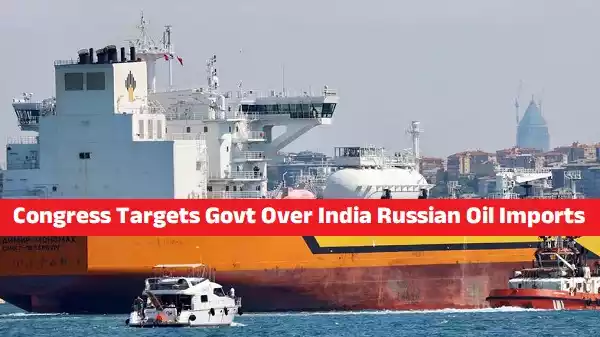

- Congress leader KC Venugopal criticized the government over reports related to India Russian oil imports.
- He alleged India needed US approval to buy oil from Russia, calling it a blow to energy sovereignty.
- The government maintains energy decisions are guided by national interest and supply security.
New Delhi: A fresh political debate has erupted over India Russian oil imports, after senior K. C. Venugopal accused the government of weakening India’s energy independence. The Congress leader said it was “deeply humiliating” if India needed a waiver from the United States to purchase crude oil from Russia.
In a post on X, Venugopal criticized Prime Minister Narendra Modi, claiming the situation undermines India’s global standing and strategic autonomy.
The remarks highlight the growing political sensitivity around India’s energy sourcing and its balancing act between major global powers.
India Russian Oil Imports Controversy Sparks Political Debate
Venugopal alleged that the government was allowing external pressure to influence India’s energy policy. According to him, needing approval from Washington to buy oil from Moscow weakens India’s sovereign decision making.
He argued that India should independently determine its energy strategy based on national interest rather than international pressure.
Also Read | Russia diverts 9.5M barrels of oil to India
The data suggests the opposition is framing the issue as a test of India’s strategic autonomy. What the market is missing is that energy diplomacy often involves complex negotiations between geopolitical alliances, sanctions regimes, and domestic economic priorities.
Background: Why India Increased Russian Oil Purchases
India significantly expanded crude purchases from Russia after Western sanctions were imposed on Moscow following the Russia–Ukraine War.
Discounted Russian crude became attractive for Indian refiners seeking to manage rising global energy prices. As a result, Russia quickly emerged as one of India’s largest oil suppliers.
This shift helped India maintain relatively stable fuel costs despite volatility in global markets.
India’s Strategic Balancing Between Russia and the West
Even as imports from Russia increased, India has maintained diplomatic engagement with both Moscow and Western nations, including the United States.
New Delhi has repeatedly emphasized its policy of strategic autonomy, stating that energy purchases are guided by affordability and supply security rather than geopolitical alignment.
The government has consistently argued that ensuring stable and affordable energy supplies remains its top priority for supporting economic growth.
Why Energy Security Remains a Sensitive Political Issue
Energy sourcing affects inflation, fuel prices, and economic stability. Because of this, crude import decisions often become political flashpoints.
Opposition parties frequently question whether global diplomatic pressure could influence India’s energy policy. Meanwhile, the government maintains that its decisions are focused on securing reliable supplies for the country’s growing economy.
The broader debate signals that energy security, foreign policy independence, and global diplomacy will remain central themes in India’s political discourse as global oil markets continue to shift.
You May Like
Trending Searches Today |
- Odisha New Excise Policy 2026: No New Liquor Shops, New Cess Introduced From April 1
- Rukuna Rath Yatra 2026 Begins on Ashokastami in Bhubaneswar
- Odisha MLA Salary Hike Bill Withdrawn
- Odisha Crime Rate 2025 Rises Despite Peaceful Claim
- India Inflation Target 4 Percent Set Till 2031
Amazon Online Shopping