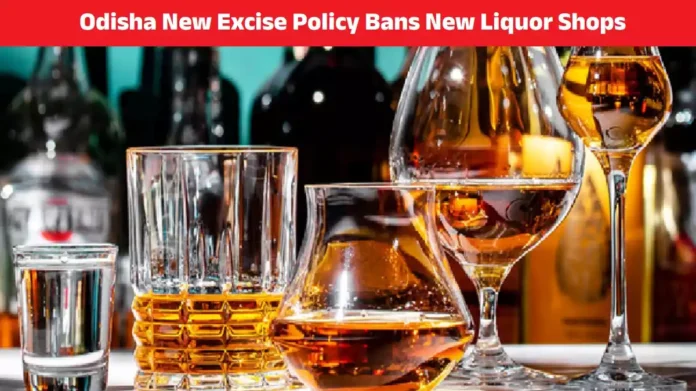

- No new liquor shops allowed across Odisha from April 1
- 0.5% de-addiction cess introduced on excise duty
- Licensing fees and excise duty on alcohol to increase
Bhubaneswar: The Odisha new excise policy 2026 will come into effect from April 1, bringing sweeping changes to liquor regulation across the state. The government has decided to halt the expansion of liquor outlets while increasing taxes and introducing a social welfare cess.
The move signals a shift in focus from revenue expansion through sales to controlled regulation and public health priorities.
Odisha New Excise Policy 2026: Key Changes Explained
One of the biggest changes is the complete restriction on opening new liquor shops.
No new OFF or OS outlets will be approved anywhere in the state, including rural areas. This marks a strong regulatory stance aimed at controlling liquor availability.
However, limited exemptions exist. Premium hotels rated three-star and above, along with clubs in industrial zones, can still operate under specific conditions.
The government has also imposed strict restrictions in religious zones. Liquor shops will not be allowed near Shri Jagannath Temple or along the Badadanda in Puri.
Another notable decision is the ban on home delivery of liquor, keeping sales strictly within licensed premises.
De-addiction Cess and Public Health Focus
A new 0.5 percent de-addiction cess will be levied on excise duty.
This fund will be used to establish and strengthen de-addiction centres across Odisha. The policy reflects growing concern over alcohol dependency and aims to channel revenue into rehabilitation efforts.
Higher Fees and Taxes on Liquor
The policy also introduces financial changes for license holders.
Application fees for excise licences will rise by 10 percent. Additionally, licensing fees will increase annually by 10 to 20 percent.
Also Read | Odisha Crime Rate 2025 Rises Despite Peaceful Claim
Excise duty on Indian Made Foreign Liquor (IMFL) and country liquor has also been increased, which could lead to higher retail prices for consumers.
Shift from Sales Target to Revenue Model
A key structural reform in the policy is the removal of mandatory sales targets.
Earlier, traders had to sell a fixed quantity of liquor. This often pushed aggressive sales practices. Now, the government has introduced a fixed revenue-based system instead.
This change reduces pressure on vendors to boost consumption artificially while ensuring steady revenue for the state.
What This Means for Consumers and Businesses
For consumers, the policy may lead to slightly higher liquor prices and limited availability in certain areas.
For businesses, especially liquor vendors, the shift to a revenue-based model could ease operational pressure but increase compliance costs due to higher fees.
Overall, the new excise policy reflects a balancing act between revenue generation, regulation, and social responsibility.
You May Like
Trending Searches Today |
- US President Trump Says Iran War Will End ‘Very Quickly’, Promises Lower US Fuel Prices
- Braj Mohan Ram Sworn In as New Odisha Governor
- Gwalior Truck Accident: 14 Dead, Around 40 Injured as Truck Hits Devotees
- ED Widens Odisha SI Exam Paper Leak Probe, Examines Recruitment Board Officials
- Kolkata Durga Puja Stampede Kills 19, 25 Injured; CM Announces Rs 25 lakh Aid and Government Jobs
Amazon Online Shopping