

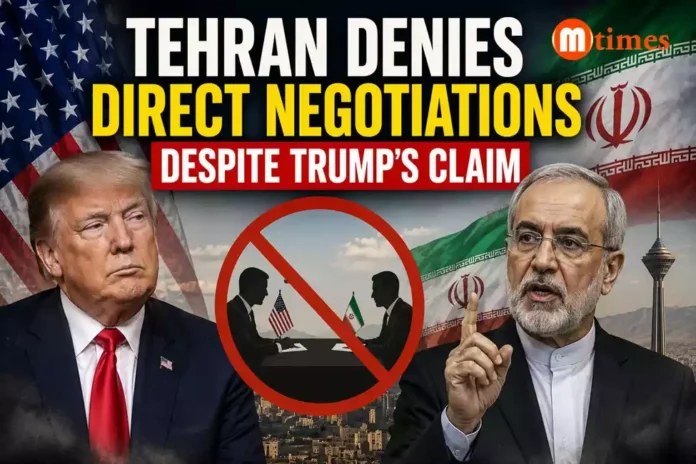

- Donald Trump said US and Iranian officials would meet in Doha, but Tehran denied any direct talks had been scheduled.
- Qatar, Oman and Pakistan continue to play key roles in mediating between the two sides.
- Security in the Strait of Hormuz remains central to negotiations following recent military escalation.
DOHA: The US Iran Talks Qatar initiative entered another phase of uncertainty after the United States and Iran issued conflicting statements about proposed discussions in Doha. While US President Donald Trump announced that officials from both countries would meet in Qatar, Iran insisted that no direct negotiations with Washington had been scheduled.
Despite the differing public positions, diplomatic engagement continues through regional mediators as both countries seek to preserve an interim agreement reached earlier this month while preventing further escalation in the Persian Gulf.
US Iran Talks Qatar Continue Through Indirect Diplomacy
The White House said Special Envoy Steve Witkoff and Jared Kushner were travelling to Qatar, with Trump stating that Iran had requested a meeting. Pakistan also indicated that diplomatic contacts would resume this week.
However, Iranian officials presented a different picture. Tehran clarified that its delegation was travelling to Qatar to discuss implementation of the interim agreement with Qatari mediators rather than hold face-to-face negotiations with US representatives.
Key developments include:
- Iran denied scheduling any direct talks with the United States.
- Qatar continues to facilitate indirect communication between both sides.
- Pakistan and Oman remain actively involved in mediation efforts.
- Discussions are expected to focus on implementing the interim agreement, including the release of frozen Iranian assets.
Iranian officials maintained that any exchanges with Washington would occur indirectly through mediators if necessary.
Why US Iran Talks Qatar Could Shape Regional Stability
The diplomatic uncertainty comes after days of heightened military tensions around the Strait of Hormuz, one of the world’s most important energy corridors. Although both sides reduced military activity on Monday, concerns remain over the security of commercial shipping and global oil supplies.
Earlier this month, the two countries reached an interim understanding that includes measures to dilute Iran’s enriched uranium stockpile, ease certain US-backed oil sanctions and safeguard freedom of navigation through the Strait of Hormuz while broader negotiations continue.
The second-order impact of successful diplomacy could extend well beyond bilateral relations. Stable shipping through the Strait of Hormuz would help reduce pressure on global energy markets, improve supply chain reliability and lower geopolitical risks affecting international trade. Conversely, continued uncertainty could prolong volatility in oil prices and increase security concerns across the Gulf region.
Meanwhile, discussions are also progressing on the release of approximately USD 6 billion in frozen Iranian assets held in Qatar, with the funds expected to be used for humanitarian purchases, including food and essential supplies.
As mediation continues through Qatar, Oman and Pakistan, the immediate challenge remains narrowing the gap between public statements and diplomatic engagement while preventing renewed military escalation in one of the world’s most strategically significant regions.
Also Read | Ram Mandir Donation Theft Case: BJP Backs Legal Action and Social Boycott
You May Like
Trending Searches Today |






Amazon Online Shopping