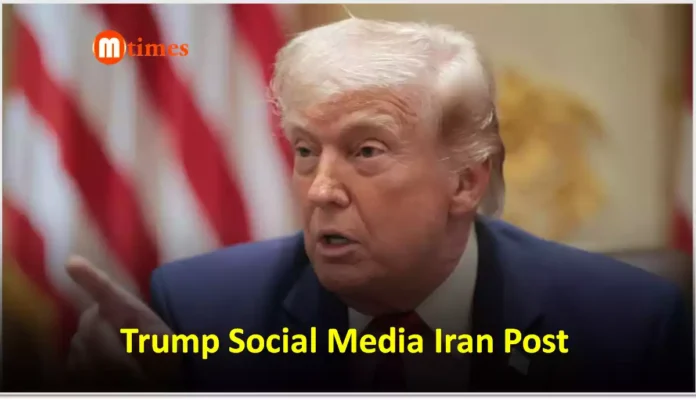

- Trump shared a post suggesting violence against Iranian leaders, triggering backlash
- Iran called the move a “moral failure” and condemned the US stance
- Incident may impact already fragile US-Iran diplomatic relations
Dubai: The question dominating headlines right now is why did Trump post about killing Iranian leaders, after Donald Trump shared a controversial message on his social platform. The post, originally written by Marc Thiessen, suggested eliminating Iranian leaders who oppose a deal with the United States.
By amplifying this message, Trump ignited a diplomatic storm and drew sharp criticism from Iran, escalating tensions at a sensitive geopolitical moment.
Why Did Trump Post About Killing Iranian Leaders: What Triggered It
The repost appears tied to ongoing tensions around US-Iran negotiations. Hardline positions on both sides have created a divide between those open to diplomatic deals and those resisting them.
The shared statement framed this divide in extreme terms, suggesting that opposition to a deal should be dealt with violently. While Trump did not add his own words, resharing the message effectively signaled endorsement.
This reflects a broader communication style where strong, provocative messaging is used to appeal to certain political audiences and project a tough stance on foreign policy.
Immediate Iran Reaction to Trump post
Iran responded swiftly, with Foreign Ministry spokesman Esmaeil Baqaei condemning the post.
He described it as evidence of a “deep moral collapse” and accused the United States of moving away from its claimed values of democracy and human rights.
The response was not just criticism, it framed the incident as part of a larger shift in US political behavior, signaling deeper diplomatic frustration.
Why diplomatic tensions US Iran Statement Carries Global Risks
Public statements involving violence against political figures carry serious implications beyond rhetoric.
Such messaging can escalate tensions quickly, especially between countries with a history of conflict. It reduces room for diplomacy and increases mistrust at leadership levels.
In volatile geopolitical environments, even indirect endorsements of violence can influence public sentiment and policy responses.
Second-Order Impact on US-Iran Relations
This controversy could harden positions on both sides, making negotiations more difficult in the near future.
It may also affect how other countries view US leadership, particularly in regions where diplomatic language and restraint are closely watched.
Repeated incidents like this can shift global perception, turning isolated remarks into long-term strategic disadvantages.
What Happens Next Trump Social Media Iran post
The key issue now is whether this remains a political controversy or escalates into formal diplomatic action.
Future communication from both Washington and Tehran will play a critical role in shaping the next phase of relations.
For now, the debate around why did Trump post about killing Iranian leaders highlights how a single social media action can ripple across global politics, influencing diplomacy, perception, and stability.
Also Read | April 24 2026 Daily Horoscope Guide
You May Like
Trending Searches Today |
- Cyclone Arnab to Cross Andhra Coast as Very Severe Storm, Odisha on Alert
- Kotia Is Odisha’s Since 1936, Says CM Mohan Majhi
- Abhishek Sharma’s 35-Ball Century Powers India to Record Chase Against New Zealand
- Jio Platforms IPO Allotment Status 2026: How to Check Online on KFintech, BSE and NSE
- Nishikant Dubey Attacks Congress, Targets Mallikarjun Kharge and Rahul Gandhi
Amazon Online Shopping