
- Jaishankar said India’s border with China requires a greater and continuous commitment of military personnel.
- New roads, tunnels, bridges and airfields have improved India’s ability to deploy and sustain troops along the LAC.
- Jaishankar said India must accelerate industrialisation and build its strengths to address the economic gap with China.
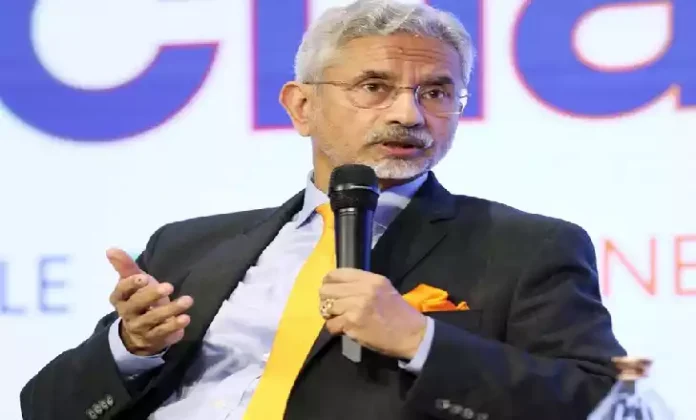
New Delhi: India’s border with China has become “more alive” and requires a much greater commitment of troops on a sustained basis, External Affairs Minister S Jaishankar said on Saturday. He also highlighted improvements in India’s military capabilities and border infrastructure since the 2020 Galwan Valley clashes.
Speaking at an interactive session during the 24th Hindustan Times Leadership Summit in New Delhi, Jaishankar said India had significantly strengthened its ability to deploy and sustain troops along the Line of Actual Control (LAC).
His remarks came amid continuing efforts by New Delhi and Beijing to normalise bilateral relations following the prolonged military standoff in eastern Ladakh.
India Strengthening Border Infrastructure
Jaishankar pointed to the construction of new tunnels, bridges and airfields as evidence of the growing attention being given to border infrastructure.
He said such developments have become increasingly frequent in recent years and have improved India’s ability to maintain a substantial military presence along the frontier.
“The border with China has become more alive in a way,” Jaishankar said, explaining that the situation requires a much greater commitment of troops on a sustained basis.
He added that the infrastructure work already completed had made it possible to deploy the required number of troops, while ongoing projects would help maintain those deployments.
Border Infrastructure Was Neglected Earlier: Jaishankar
The External Affairs Minister said India’s border infrastructure had remained neglected until about a decade ago, despite discussions and plans for development.
He argued that the change became visible through improvements in road connectivity, tunnelling and strategic positioning along the frontier.
According to Jaishankar, greater attention, resources and policy support have been provided to border infrastructure over the past decade.
He also said India’s ability to deploy and sustain military personnel along the China border had improved markedly since the Galwan clashes.
Galwan Clashes Changed India-China Relations
India-China relations deteriorated sharply following the violent clashes between Indian and Chinese troops in the Galwan Valley of eastern Ladakh in June 2020.
The confrontation resulted in the deaths of 20 Indian soldiers and an unspecified number of Chinese troops.
The military standoff continued for more than four years, severely affecting diplomatic and bilateral relations between the two countries.
Efforts to improve ties gained momentum after Prime Minister Narendra Modi met Chinese President Xi Jinping in Kazan, Russia, in October 2024, following progress in resolving the military face-off.
The two sides subsequently continued discussions on improving bilateral engagement and addressing outstanding concerns.
Jaishankar Says India Missed Industrialisation Opportunity
During the summit, Jaishankar also discussed the economic gap between India and China.
He recalled that the two countries had economies of broadly similar size around the time former Prime Minister Rajiv Gandhi visited China in 1988.
However, he said China made a major push towards modernisation and industrialisation during the 1980s, while India missed an important opportunity.
Jaishankar said India introduced economic reforms in the 1990s but did not continue them consistently across different sectors.
He stressed that India now needs to accelerate industrialisation and strengthen its domestic capabilities to address the economic imbalance with China.
India Needs to Build Its Own Strengths
The External Affairs Minister said India cannot bridge the economic gap with China simply by following the same development path.
Instead, the country needs to identify areas where it has the potential to make significant progress and build its strengths through innovation, manufacturing and industrial development.
He emphasised that India should focus on sectors where it can achieve major improvements rather than trying to compete with China on every issue.
You May Like