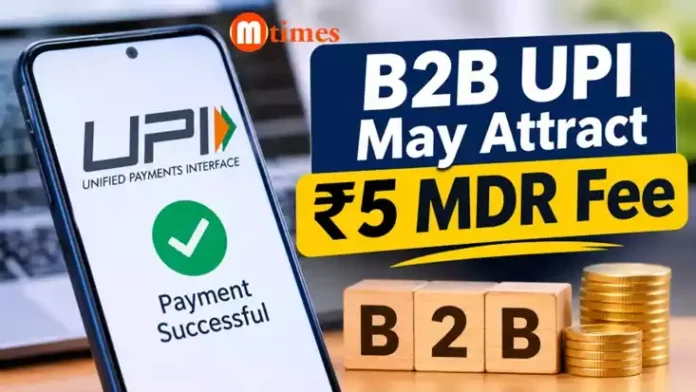

- B2B and merchant-to-merchant UPI transactions are likely to attract a flat ₹5 MDR charge.
- The proposed rate is significantly below the maximum ₹300 charge traders had feared under the percentage-based structure.
- The implementation date is yet to be finalised, and the proposal should not be treated as an already implemented charge.
Mumbai, November 19, 2026: Business-to-business (B2B) and merchant-to-merchant (M2M) transactions through the Unified Payments Interface (UPI) are likely to attract a flat Merchant Discount Rate (MDR) of ₹5 per transaction under the proposed payment framework. The proposed charge is considerably lower than the fee of up to ₹300 that traders had feared.
According to people familiar with the discussions, the decision was taken by the National Payments Corporation of India (NPCI)’s UPI and Services Steering Committee. However, the implementation date has not yet been finalised.
The proposed flat fee would cover transactions between wholesalers and retailers, payments through B2B marketplaces and other business-to-business collections.
Why Has the ₹5 UPI Fee Been Proposed?
The proposed flat rate is intended to address concerns over the financial impact of MDR charges on businesses that regularly make high-value payments through UPI.
The average merchant-to-merchant UPI transaction is estimated to be around ₹20,000 to ₹40,000. Under the earlier proposed rate of 0.4 per cent, such payments could have attracted charges ranging from ₹80 to ₹160.
For transactions of ₹75,000 or more, the fee could have reached the maximum cap of ₹300.
A flat ₹5 charge would substantially reduce the potential payment-processing cost for wholesalers, retailers and distributors.
Traders Had Raised Concerns Over Additional Charges
The All India Consumer Products Distributors Federation (AICPDF) had written to Union Finance Minister Nirmala Sitharaman, seeking an exemption for merchant-to-merchant transactions from the MDR framework.
The federation highlighted the growing dependence of retailers and distributors on UPI for business payments. It stated that around 65 per cent of consumer payments received by retailers and 40 to 45 per cent of payments made by retailers to distributors against credit bills were settled through UPI.
According to the federation, additional charges at both stages could affect the financial viability of retailers and distributors.
It also urged the government to examine the Goods and Services Tax (GST) implications of MDR charges.
What Is MDR and How Does It Work?
Merchant Discount Rate, or MDR, is a payment-processing fee paid by a merchant to its bank or payment service provider for accepting digital payments.
The fee is shared among participants in the payment-processing ecosystem. It is not the same as a tax directly collected by the government.
The proposed ₹5 charge for B2B transactions is separate from the previously announced percentage-based MDR structure for eligible person-to-merchant (P2M) payments.
Will Ordinary UPI Users Have to Pay ₹5?
The proposed flat ₹5 fee concerns merchant-to-merchant transactions, such as payments between wholesalers and retailers. It should not be confused with ordinary person-to-person UPI transfers between individuals.
The previously announced MDR framework also provides separate rules for eligible merchant payments. The proposed B2B rate does not mean that every UPI user will have to pay ₹5 for sending money.
Consumers should check the applicable official rules rather than assume that the proposed business transaction charge applies to personal UPI payments.
Implementation Date Yet to Be Announced
Although the NPCI committee has reportedly decided on the flat ₹5 rate for merchant-to-merchant transactions, the effective date is yet to be announced.
The September 2026 MDR framework had originally been scheduled to take effect from October 15, but its implementation was deferred until after Diwali. A revised date had not been announced in the latest report.
Further clarity is expected once the revised framework and implementation details are formally communicated.
You May Like