
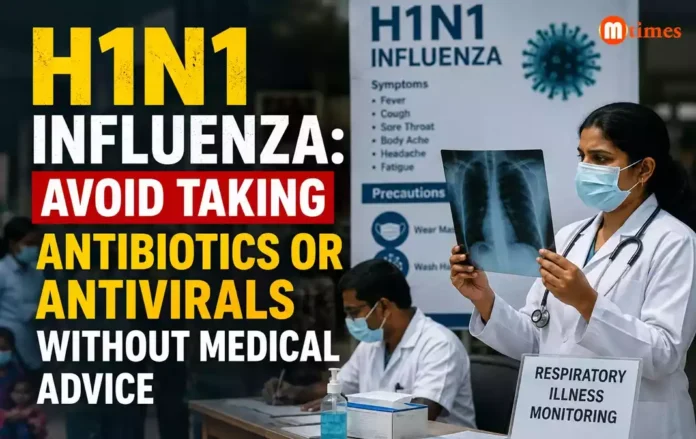

- H1N1 influenza India trends are being closely monitored through a nationwide surveillance network.
- Health officials said the currently circulating viruses show no indication of a new or unusually dangerous strain.
- Seasonal influenza is generally mild in otherwise healthy people, but high-risk groups need greater caution.
New Delhi: The Union Health Ministry has said there is no need for panic over the current H1N1 influenza situation in India, with ongoing surveillance indicating that the viruses circulating in the country remain within the expected seasonal pattern.
The Ministry of Health and Family Welfare is working with the Department of Health Research, ICMR and National Centre for Disease Control to track influenza activity, viral characteristics and disease severity across the country.
Officials said the available evidence does not point to the emergence of a new influenza threat.
H1N1 Influenza India Surveillance Finds Seasonal Pattern
According to Dr Rajiv Bahl, Secretary of the Department of Health Research and Director General of ICMR, India is continuing to monitor influenza through a network of 73 Virus Research and Diagnostic Laboratories.
Genomic analysis has identified the circulating Influenza A H1N1 viruses as A/Missouri/11/2025 (H1N1) pdm09-like viruses. The HA gene analysis places the isolates within clade 6B.1A.5a2a, subclade D.3.1.1.
Officials said this lineage has been circulating in India since 2025.
The genetic changes identified are consistent with normal antigenic drift, a process in which influenza viruses gradually accumulate minor genetic changes as they continue circulating.
H1N1 Influenza India: Who Needs Extra Caution?
Seasonal influenza, including H1N1, is generally a mild and self-limiting respiratory illness among otherwise healthy individuals.
Common symptoms include fever, cough, sore throat, headache, body ache, fatigue and weakness.
Most people recover with adequate rest, hydration and supportive care. However, certain groups have a greater risk of complications.
These include older adults, young children, people with underlying health conditions and those with weakened immunity. Such individuals should seek medical advice promptly if influenza-like symptoms develop.
H1N1 Influenza India: Safety Measures
Health authorities have advised people to follow basic respiratory and infection-control practices during the seasonal flu period.
People should cover their mouth and nose while coughing or sneezing, wash their hands regularly and stay home when unwell. Adequate fluids, sufficient rest and a balanced diet can also support recovery.
Medical consultation is recommended when symptoms become severe, persist for an unusually long period or worsen.
People should also avoid taking antibiotics or antiviral medicines without medical advice. Unnecessary medication can create additional health risks and may not be appropriate for the underlying illness.
The government has advised the public not to panic simply because H1N1 has been detected.
India’s surveillance system will continue tracking influenza activity, genetic changes and disease severity. The extensive laboratory network is designed to identify unusual developments early and allow health authorities to respond if the situation changes.
For now, officials say the available evidence remains consistent with seasonal influenza, rather than a new or more dangerous H1N1 strain.
You May Like
Trending Searches Today |
- Cyclone Arnab: Red Alert Issued For Six Districts, Odisha CM Reviews Preparedness, Fishermen Warned
- PM Modi to Inaugurate RBI Data Centre in Bhubaneswar on October 25
- India Beat New Zealand by Four Wickets in 2nd T20I, Take 2-0 Series Lead
- India and Azerbaijan Discuss Strategic Issues, Trade and Energy Cooperation
- Shamonda Virus: First Human Infection Reported in France, WHO Investigates
Amazon Online Shopping