

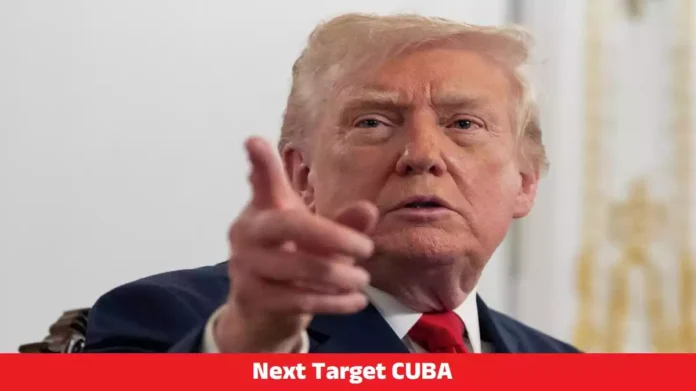


- Trump hints Cuba could be next US target after Iran and Venezuela
- Sharp criticism of NATO raises questions over alliance future
- Statement adds to global tensions amid ongoing geopolitical conflicts
New Delhi: The Trump Cuba next statement NATO criticism has intensified global concerns after the US President openly hinted that Cuba could be the next focus of American action. Speaking at a major investment summit in Miami, Donald Trump made the remark while referencing recent US military moves in Venezuela and Iran, signaling a more aggressive foreign policy posture.
Although he did not outline a clear plan, the statement comes at a time when geopolitical tensions are already high, raising questions about whether the US is preparing for further intervention in the region.
Trump Cuba Next Statement NATO Criticism: What He Said
During his speech, Trump said “Cuba is next,” before asking media to ignore the remark, only to repeat it again moments later.
The comment followed US actions in Venezuela earlier this year and ongoing military operations involving Iran. Analysts say the reference was not accidental but reflects a broader strategic narrative being shaped by the administration.
Trump has previously indicated that Cuba’s government is under pressure due to its economic crisis, suggesting the country could see major political change soon.
Why Cuba Is Back in Focus
Cuba is currently facing one of its worst economic crises in decades, driven by fuel shortages and reduced oil imports. The situation has been worsened by long-standing US sanctions and disruptions in energy supply chains.
The United Nations has warned that the island nation could face a humanitarian crisis if shortages continue.
Experts believe this economic vulnerability may be a key factor behind Washington’s renewed focus on Cuba. A weakened economy often creates openings for political or strategic intervention.
NATO Called “Paper Tiger” Amid Alliance Tensions
Alongside his remarks on Cuba, Trump sharply criticised NATO, calling it a “paper tiger” and questioning its reliability as a military alliance.
He argued that member countries failed to support the United States during critical moments and suggested that Washington should rethink its commitments to defending allies.
Growing Divide Between US and Allies
Trump’s comments point to a widening gap between the US and its traditional partners in Europe. He claimed that support from allies often comes too late to be meaningful, highlighting frustrations over burden-sharing within NATO.
Also Read | LPG Ships India Strait of Hormuz: Supply Boost Amid Rising Tensions
This stance could reshape future military cooperation and alliance structures, especially if the US moves toward a more unilateral approach in global conflicts.
What This Means Going Forward on Cuba
The combination of a potential Cuba focus and criticism of NATO signals a shift toward a more assertive and independent US foreign policy.
While no official action has been announced, the messaging alone is enough to raise diplomatic tensions. If followed by concrete steps, it could significantly alter geopolitical dynamics in both the Americas and Europe.