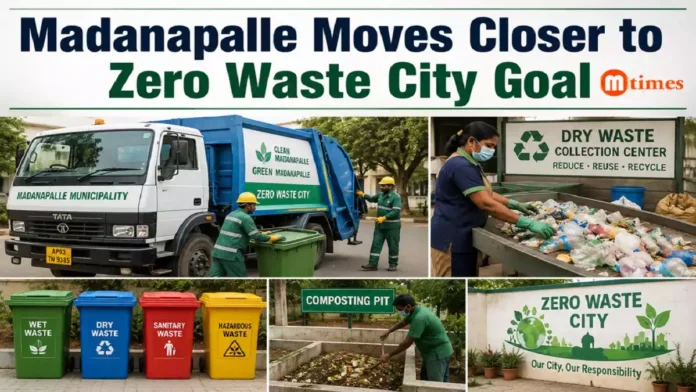

- Madanapalle processes around 62 tonnes of municipal waste every day through scientific waste management.
- Wet waste is converted into compost, while recyclable materials are sent to authorised recycling facilities.
- Bio-mining has cleared over 36,500 metric tonnes of legacy waste, reclaiming nearly 9.4 acres of land.
Madanapalle: The Madanapalle zero waste city initiative is emerging as a model for sustainable urban sanitation, with the Andhra Pradesh municipality adopting an integrated waste management system under the Swachh Bharat Mission-Urban (SBM-U) 2.0. By focusing on waste segregation, recycling and resource recovery, the civic body is reducing landfill dependence while improving environmental sustainability.
The initiative demonstrates how scientific waste management can address the challenges of rapid urbanisation, rising waste generation and limited landfill space, while creating cleaner and greener urban communities.
Madanapalle Zero Waste City Relies on Scientific Waste Processing
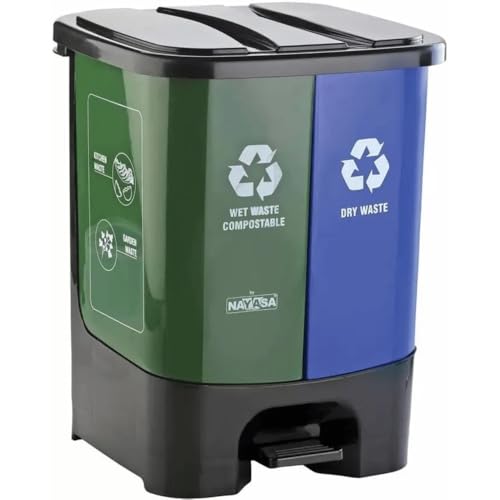
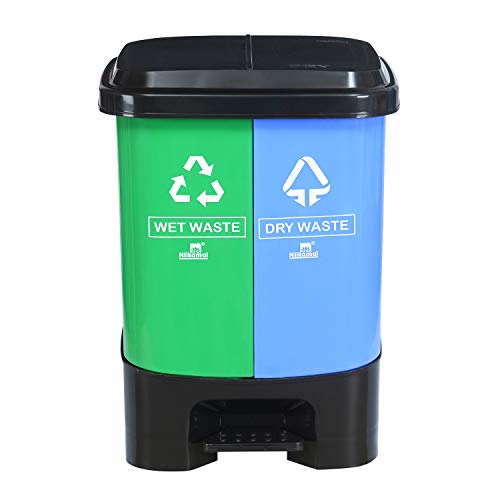
Madanapalle generates approximately 62 tonnes of municipal solid waste each day, including 36 tonnes of wet waste, 25.5 tonnes of dry waste and 0.5 tonnes of domestic hazardous waste. The municipality has introduced source-level segregation, encouraging households to separate biodegradable, non-biodegradable and reusable waste before collection.
Biodegradable waste is managed through decentralised systems, with bulk waste generators encouraged to install on-site composting units. Residents are also being encouraged to adopt home composting and terrace gardening to reduce the amount of waste entering the municipal system.
Around 15.5 tonnes of wet waste is processed daily through windrow composting, producing compost used in parks and public gardens. An additional three tonnes is treated through vermi composting to generate nutrient-rich organic manure.
Dry waste is sorted into recyclable and non-recyclable materials. Recyclables are processed at the Material Recovery Facility before being supplied to authorised recycling units, while non-recyclable waste is sent to cement plants for co-processing, reducing landfill disposal and improving resource utilisation.
Recycling, Waste-to-Art and Bio-Mining Drive Sustainability
The municipality has expanded its Reduce, Reuse and Recycle (RRR) Centre, where electronic waste, old clothes, books, toys and footwear are collected. Usable items are repaired and redistributed to economically weaker communities, homeless individuals and old-age homes, extending product life while reducing waste.
Madanapalle has also promoted environmental awareness through Waste-to-Art projects that transform discarded tyres and other waste materials into decorative public installations. The Waste-to-Art Park at NVR Layout has become a prominent example of creative recycling.
The municipality has further addressed legacy waste through bio-mining and bio-remediation, clearing more than 36,500 metric tonnes of accumulated waste and reclaiming 9.4 acres of land. Part of the reclaimed area has been converted into green spaces, while recovered materials such as Refuse Derived Fuel are supplied to cement plants and reusable soil is utilised for land development.
Madanapalle Zero Waste City Highlights Sustainable Urban Governance
Madanapalle’s integrated approach combines scientific waste processing, recycling, public participation and environmental awareness to reduce landfill dependence and improve urban sanitation. By linking waste management with resource recovery and community engagement, the municipality is setting an example for other cities working towards sustainable and circular urban development under the Swachh Bharat Mission-Urban 2.0.
You May Like
Trending Searches Today |
- Banks Open Today Ahead of Three-Day Nationwide Strike
- Ishwar Chandra Vidyasagar: Social Reformer Remembered On His 207th Birth Anniversary
- OSSTET 2026 Exam on September 30, Download Admit Card, Check Details
- Odisha Old Age Pension Arrears to Be Paid by October
- Naveen Patnaik Demands CEC Resignation, SIR Review
Amazon Online Shopping