
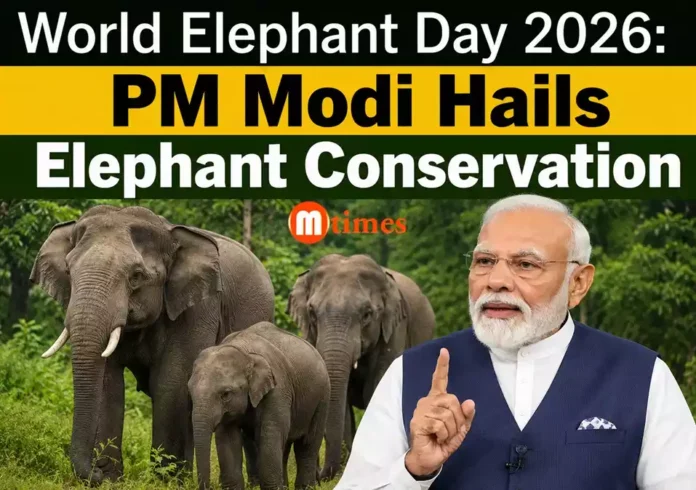

- India is home to more than 60% of the world’s wild Asian elephants, according to Prime Minister Narendra Modi.
- India has 33 Elephant Reserves supporting elephant habitats and conservation.
- Modi highlighted the elephant’s importance to India’s ecological heritage.
NEW DELHI: Prime Minister Narendra Modi marked World Elephant Day 2026 by highlighting India’s responsibility to protect one of the country’s most important wildlife species. He said the elephant has remained deeply connected with India’s ecological heritage while stressing the country’s significant role in conserving wild Asian elephants.
In a social media message, Modi noted that India is home to more than 60 per cent of the world’s wild Asian elephant population. The country also has 33 designated Elephant Reserves, providing protected habitats and supporting long-term conservation efforts.
The emphasis on protected landscapes reflects a broader conservation challenge. Protecting elephants requires not only safeguarding forests but also maintaining suitable habitats and reducing pressure on areas where wildlife and human settlements increasingly intersect.
World Elephant Day 2026 Highlights India’s Conservation Role
India’s large share of the global wild Asian elephant population gives the country a major responsibility in the species’ conservation. Elephant Reserves are an important part of that effort because they provide dedicated landscapes where elephant populations can survive and move.
The conservation of elephants also has wider ecological significance. As large herbivores, elephants influence vegetation, forest structure and the movement of nutrients, making their protection relevant to the health of broader ecosystems.
World Elephant Day 2026 Recognises Conservation Workers
Modi also acknowledged the contribution of people working directly with elephants and their habitats.
Forest personnel, scientists, veterinarians and mahouts play different but connected roles in protecting and managing elephant populations. Local communities are equally important because successful conservation depends on cooperation between wildlife authorities and people living around elephant habitats.
The recognition comes at a time when elephant conservation increasingly requires coordination across multiple stakeholders. Protecting habitats, managing human-elephant interactions and ensuring the welfare of individual animals all form part of the larger conservation effort.
India’s Elephant Conservation Efforts
The 33 Elephant Reserves represent a key component of India’s strategy to maintain suitable habitats for elephants. Their importance extends beyond protecting individual animals, as connected and secure habitats can support healthier wildlife populations over the long term.
World Elephant Day provides an opportunity to focus attention on that wider responsibility. India’s role in conserving more than 60 per cent of the world’s wild Asian elephants means the country’s conservation decisions can have consequences well beyond its borders.
Modi’s message placed the spotlight not only on elephants but also on the people and institutions working to protect them, reinforcing the idea that long-term wildlife conservation depends on sustained cooperation between governments, experts and local communities.
You May Like
Trending Searches Today |
- Bhubaneswar Durga Puja Traffic Advisory: Routes, Diversions
- UPI Merchant Charges to Begin After Diwali, NPCI Announces
- Indian Army Launches Bharat Rice for Troops, Signs MoU With FCI
- Odisha Durga Puja Rain Forecast: Low-Pressure System Possible
- IIIT Ranchi Student Found Dead in Hostel, Students Protest
Amazon Online Shopping