
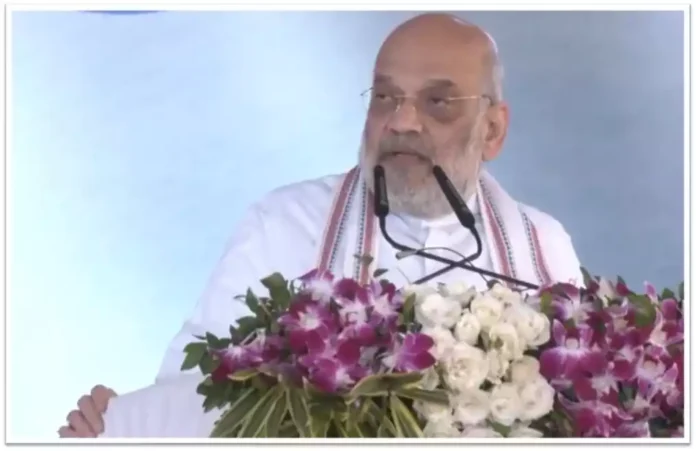

- Amit Shah said the government is developing an integrated ecosystem around cattle rearing.
- The proposed value chain includes biogas, organic fertiliser, dairy processing and market access.
- Shah said cattle rearers could benefit significantly from the cooperative sector.
Bhopal: Union Home and Cooperation Minister Amit Shah has said the government is working to build an integrated economic ecosystem around cattle rearing, with the aim of creating additional opportunities for livestock owners and strengthening the rural economy.
Addressing the state-level Gopalak Sammelan in Bhopal, Shah highlighted activities ranging from the conversion of cattle dung into biogas and organic fertiliser to dairy processing and improved market access.
The approach is linked to the government’s broader focus on dairy cooperatives and the circular use of resources in the livestock sector. Existing initiatives under White Revolution 2.0 include cooperative structures for scientific cattle-dung management and access to inputs and animal-health services.
Cattle Rearing to Get Wider Cooperative Support
Shah said livestock rearers could be among the major beneficiaries of the Ministry of Cooperation and the expansion of dairy cooperatives.
The proposed ecosystem covers multiple stages of the cattle-based economy. These include animal rearing, milk production and processing, utilisation of cattle dung, production of biogas and organic manure, and connecting producers with organised markets.
Government initiatives already include the Gomay Sahkari Samiti Multi-State Limited for scientific management and utilisation of cattle dung. The government has said such measures are intended to promote circularity in the dairy sector while generating additional income and employment opportunities for rural households.
Focus on Dairy Processing and Market Access
The Bhopal programme also included several dairy-sector initiatives in Madhya Pradesh.
According to the government, a 3 lakh litres per day milk processing plant is planned in Ujjain at a cost of Rs 255 crore. A product dairy plant with a capacity of 40,000 litres per day and a state-level central laboratory were also scheduled to be inaugurated in Bhopal.
The measures are aimed at strengthening processing infrastructure and improving the connection between dairy producers and organised markets.
Amit Shah Highlights Three-Year Justice Timeline
Speaking about criminal justice reforms, Shah said the new criminal laws are designed to modernise India’s justice delivery system and introduce greater use of technology.
He said that once the new criminal laws are fully implemented, the government aims to complete the judicial process from registration of an FIR through the Supreme Court within three years.
The Bharatiya Nyaya Sanhita, Bharatiya Nagarik Suraksha Sanhita and Bharatiya Sakshya Adhiniyam came into force in July 2024. The government has set time-bound justice as one of the central objectives of their implementation.
Shah has previously described the fully implemented system as potentially the world’s most modern criminal justice system. The government’s reform programme includes digital processes, forensic technology and greater integration among police, prosecution, courts, prisons and forensic institutions.
The three-year timeline is a stated government objective, with its achievement dependent on the full implementation of the laws and coordination across the institutions involved in the criminal justice process.
You May Like
Trending Searches Today |
- India and Azerbaijan Discuss Strategic Issues, Trade and Energy Cooperation
- Shamonda Virus: First Human Infection Reported in France, WHO Investigates
- Cyclone Threat Near Odisha Coast: IMD Tracks Developing Bay of Bengal System
- Sanju Samson Praises Team Effort After India Beat New Zealand in First T20I
- Bitcoin Vs Gold Vs Nifty 50: Which Investment Delivered The Best 5-Year Returns?
Amazon Online Shopping