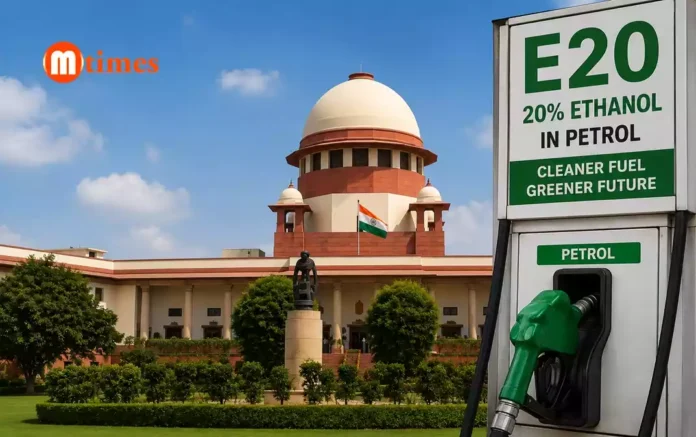

- The Supreme Court declined to entertain a petition seeking mandatory disclosure of ethanol content in petrol.
- The petition sought ethanol percentage details on fuel nozzles, bills and receipts.
- The petitioner was allowed to approach the concerned High Court with the grievances.
New Delhi: The Supreme Court on Monday declined to entertain a petition seeking mandatory disclosure of ethanol content in petrol at fuel stations and on fuel receipts. The court allowed petitioner N K Goswami to approach the concerned High Court with his grievances.
A bench comprising Justices MM Sundresh and Prasanna B Varale heard the petition. Goswami argued that consumers should have access to information about the amount of ethanol present in the petrol they purchase.
The petition sought directions requiring petrol pumps to display the ethanol percentage on fuel nozzles and include the information on bills and receipts issued to customers.
Supreme Court Ethanol Petrol Disclosure Plea
The petition was broader than simply seeking information on fuel receipts. It also called for a vehicle-wise compatibility database covering different ethanol blends.
According to the plea, such information would help consumers understand the ethanol content of the fuel being sold and its compatibility with different vehicles.
During the hearing, the Attorney General objected to the manner in which the petition had been pursued. The law officer described it as a “proxy petition” and pointed out that a similar plea had been dismissed by the Supreme Court last year.
The bench ultimately declined to entertain the petition at the apex court level.
Ethanol Content Information and Consumer Concerns
The petitioner maintained that consumers have a right to know the ethanol content in petrol. The demand included disclosure at the point of sale, particularly through information displayed on petrol pump nozzles and fuel receipts.
The proposed vehicle-wise compatibility database was also part of the petition. Such a database would provide information relating to different ethanol blends and vehicle compatibility.
The Supreme Court did not grant the directions sought in the petition. Instead, it gave Goswami the option of taking the matter before the appropriate High Court.
What Happens Next in the Ethanol Disclosure Case
With the Supreme Court declining to entertain the petition, the petitioner can pursue the grievances before the concerned High Court, as permitted by the bench.
The case highlights a demand for greater information about ethanol-blended petrol at the point of purchase. However, the Supreme Court’s order, as described in the supplied information, does not impose any new requirement on petrol pumps to display ethanol percentages on nozzles, bills or receipts.
You May Like
Trending Searches Today |
- IIIT Ranchi Student Found Dead in Hostel, Students Protest
- Odisha Police Tighten Security Ahead of October 15 Student Elections
- US Eases Russian Diesel Sanctions Until April 2027
- Mahalaya Begins Durga Puja Countdown Across India
- Odisha Plans New ABADHA-Like Scheme for Puri Development
Amazon Online Shopping