
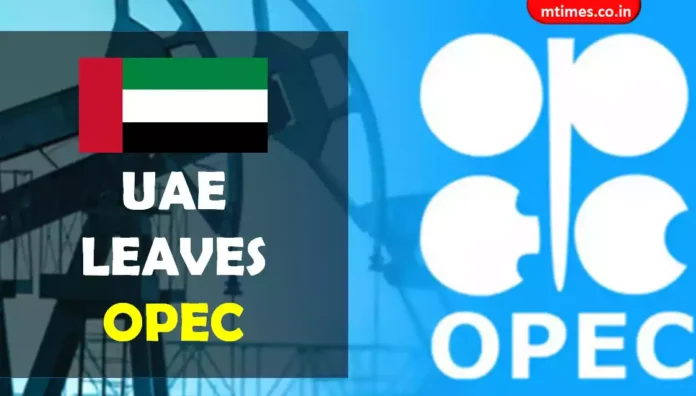

- UAE will leave OPEC and OPEC+ effective May 1, 2026
- Long-running production quota disputes were the core trigger
- Exit could reshape oil pricing power and Middle East energy politics
The UAE leaves OPEC 2026 decision marks one of the most significant disruptions to global oil politics in recent years. The United Arab Emirates’ departure from both OPEC and OPEC+ reflects escalating frustration over production caps that Abu Dhabi believes have restricted its economic ambitions despite billions invested in expanding output capacity.
This is not just a policy disagreement. It signals a larger challenge to OPEC’s long-standing ability to maintain internal unity while balancing national ambitions against collective price control.
UAE Leaves OPEC 2026: Why This Exit Matters
United Arab Emirates has long pushed for greater flexibility in oil production after heavily investing in capacity expansion.
OPEC’s quota system, designed to control supply and stabilize prices, increasingly clashed with the UAE’s strategy of maximizing output and market share.
In practical terms, the UAE appears to have concluded that quota discipline now costs more than membership benefits.
That shift is significant because it reflects a growing tension inside producer alliances, members with aggressive growth strategies may no longer accept collective restraint indefinitely.
Also Read | Trump Iran Peace Proposal Resistance Deepens as Nuclear Deadlock Blocks Ceasefire
What OPEC and OPEC+ Actually Do
OPEC was created to coordinate oil production and influence global prices through supply control.
OPEC+ expanded that power by including major non-OPEC producers like Russia, creating a broader coalition responsible for roughly 40 to 45 percent of global oil output.
Their main tool is simple, quotas.
By cutting supply, they can support prices. By increasing output, they can cool overheated markets.
But this system depends heavily on internal discipline, and discipline becomes fragile when member states prioritize national strategy over collective control.
Why Countries Leave OPEC
Countries typically leave when quota restrictions conflict with urgent domestic goals.
For the UAE, those goals include:
- Monetizing expanded capacity
- Increasing export flexibility
- Responding faster to geopolitical instability
Recent exits by Angola, Ecuador, and Qatar reveal a pattern, OPEC membership can become less attractive when national economic priorities diverge from cartel strategy.
Also Read | LPG Booking Rules May 2026: What Could Change for Cylinder Prices, Booking Gap, OTP Delivery, and PNG Users
The Bigger Problem for OPEC
The UAE exit also exposes broader structural weaknesses.
OPEC’s influence already faces pressure from:
- US shale production
- Renewable energy growth
- Electric vehicle adoption
- Internal quota violations
If more members begin questioning quota fairness, OPEC could gradually shift from a unified pricing bloc to a looser coordination platform.
Geopolitical Layer: Beyond Oil Economics
Reports suggest the UAE’s frustration was not purely economic.
Regional security tensions, especially around Iranian threats and perceptions of inadequate Arab support, may have accelerated strategic recalibration.
This adds a geopolitical layer, energy alliances are increasingly shaped not only by oil prices, but by defense and diplomatic trust.
What This Could Mean for Global Oil Prices
In the short term, markets may react with volatility.
If the UAE ramps up production independently, it could pressure prices downward unless offset by broader cuts elsewhere.
Long term, the bigger issue is whether OPEC’s market signaling power weakens.
If traders begin viewing OPEC unity as unreliable, price control through announcements alone may become less effective.
Also Read | Petrol Diesel Excise Duty Cut India: Govt Slashes Taxes to Tackle Oil Crisis
Second-Order Impact on Global Energy Transition
Paradoxically, instability inside oil alliances could accelerate renewable investment.
Volatile fossil fuel pricing often strengthens the business case for alternative energy, especially in import-dependent economies.
That means UAE’s exit may influence not just oil markets, but also strategic energy diversification worldwide.
The UAE leaves OPEC 2026 decision is ultimately about more than quotas, it reflects a deeper transformation in how nations balance sovereignty, security, and market power in a rapidly changing energy world.
You May Like
Trending Searches Today |
- US President Trump Says Iran War Will End ‘Very Quickly’, Promises Lower US Fuel Prices
- Braj Mohan Ram Sworn In as New Odisha Governor
- Gwalior Truck Accident: 14 Dead, Around 40 Injured as Truck Hits Devotees
- ED Widens Odisha SI Exam Paper Leak Probe, Examines Recruitment Board Officials
- Kolkata Durga Puja Stampede Kills 19, 25 Injured; CM Announces Rs 25 lakh Aid and Government Jobs
Amazon Online Shopping