

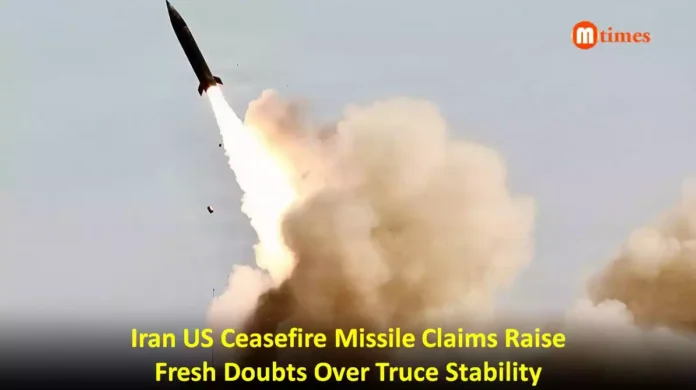

- Iran denies launching missiles during ceasefire period
- US confirms two-week truce and Strait of Hormuz reopening
- Israel strikes in Lebanon create new tensions outside deal
Dubai: The Iran US ceasefire missile claims have triggered fresh uncertainty just hours after a fragile truce was announced. Iran’s Islamic Revolutionary Guard Corps has denied launching any missiles since the ceasefire began, pushing back against reports of continued attacks and blaming external actors instead.
The development raises concerns about how stable the agreement really is, especially as regional conflict continues to spill beyond Iran and the United States.
Iran US Ceasefire Missile Claims and IRGC Response
The IRGC stated clearly that no missiles have been fired at any country since the ceasefire came into effect. It dismissed reports of drone or missile activity as actions carried out by what it called the “Zionist enemy” or the United States.
This strong denial appears aimed at maintaining Iran’s position in ongoing negotiations while avoiding escalation.
At the same time, Iran’s leadership has signalled readiness for diplomacy, suggesting that it wants the ceasefire to hold at least through the negotiation window.
Iran US Ceasefire Talks Shift to Pakistan
Diplomatic efforts are now moving forward, with talks expected to begin in Islamabad. Iran’s Supreme National Security Council has confirmed participation, indicating a serious push toward dialogue.
Deputy Foreign Minister Saeed Khatibzadeh said Iran is actively engaging and expects the United States to respond in kind.
The choice of Pakistan as a venue reflects an attempt to create neutral ground for sensitive discussions.
Israel Lebanon Strikes Complicate Iran US Ceasefire
Despite the ceasefire between Iran and the US, Israeli military actions in southern Lebanon have added a new layer of complexity.
Airstrikes and artillery reportedly targeted multiple locations, including Tyre. The US has clarified that these actions are not covered under the ceasefire agreement, citing Hezbollah’s involvement.
Iran, however, sees these strikes as a violation of the broader spirit of de-escalation, raising the risk of indirect confrontation.
What This Means for Middle East Stability
The situation highlights a key weakness in the ceasefire. While Iran and the US may pause direct conflict, regional dynamics involving Israel and Hezbollah continue to threaten stability.
If tensions in Lebanon escalate further, it could undermine negotiations and pull multiple actors back into conflict.
For now, the ceasefire offers a narrow window for diplomacy, but its success depends on whether all sides can avoid triggering events beyond the agreement’s scope.
Also Read | Iran Strait of Hormuz Ceasefire Opens 2 Week Window for Global Shipping
You May Like
Trending Searches Today |
- Odisha Weather Live Updates: Bay of Bengal Low Pressure May Intensify Into Deep Depression
- CM Majhi Orders Return of Odia Tourists’ Mortal Remains In MP Car Accident
- Odisha Devotees MP Car Accident: PM Modi Announces ₹2 Lakh Aid for Each Deceased Victim
- Seven From Odisha Family Killed After Car Swept Into Drain in Madhya Pradesh
- Ekamra Residency: BDA Opens Online Applications for 496 Apartments
Amazon Online Shopping


